
HN people cite it constantly as the clearest explanation of normalization of deviance and how complex systems drift toward failure.
Topics › Systems, Networks & Security
The best cloud, devops & reliability videos, according to Hacker News
85 videos about cloud, devops & reliability that Hacker News commenters keep pointing each other to, ranked by how many separate months they were recommended. Part of Systems, Networks & Security.

A perennial HN recommendation for outage and postmortem threads, praised as funny, educational and one of the best postmortems anyone has seen.

The go-to recommendation for learning DynamoDB data modeling, with many saying it made access-pattern-driven design click.

HN people point to it as the best demonstration of literate devops, showing documentation and execution woven together in Emacs.

HN considers it one of the best talks for understanding how containers work from the ground up.

HN points to it whenever Hetzner comes up, as the best look inside their unusual, semi-custom and low-cost data center setup.

HN recommends Cantrill talks generally for their mix of industry history, technical depth and entertaining delivery, and this one is a favorite for storage and data integrity threads.

A perennial HN favorite whenever firmware, disks, ECC or opaque hardware come up, valued as both entertaining and sobering.

Recommended for its practical strategy for preserving state on ephemeral containers, and for the live demo.

HN points to it as the founders' own explanation of what Oxide is building and why, a frequent link whenever Oxide comes up.

HN treats Hamilton's annual talks as the best window into how AWS regions and hardware are actually built.

Recommended as a detailed, candid case study of scaling a real system from zero users to millions.

HN regards it as a gem of a technical talk that tackles a fundamental debugging problem and shows a new technology solving it.

HN recommends it whenever a failure is blamed on human error, as a clear case study in looking for the systemic second story.

HN recommends it as an accessible way to remove the magic from Docker and understand how containers work.

HN commenters call it a model demo video and the quickest way to see how much one developer packed into a self-hosted file server.

HN people recommend it as a must-watch for anyone running complex systems, and some rewatch it regularly to remember its principles.

Cited in data center siting debates as evidence that noise and infrasound can seriously affect people living nearby.

HN engineers recommend it for its core insight that limiting concurrency naturally yields request-rate limits, and for its link to queueing theory.

HN recommends it as a talk that makes containers click, showing that containerization is not virtualization and demystifying what Docker does.

HN commenters point to it as a primer on modern Rails and as a rebuttal to cloud 'learned helplessness', worth watching even by non-Ruby developers.

Considered a favorite deep dive into how AWS does virtual networking at L3 and why VPC hosts cannot snoop each other.

HN recommends Cantrill's integrity rant when discussing corporate ethics and companies that act on principles.

HN commenters recommend it as an engaging and informative explanation of why containers on VMs waste resources and hurt performance.

Recommended as an accessible tour of modern mainframes that compares them sensibly to ordinary server setups.

Cited in threads on AI infrastructure as evidence of the water, power and community costs of data centers.

HN recommends it whenever cloud egress costs come up, since it gives concrete numbers on real bandwidth costs versus cloud pricing.

HN points to it whenever community or DIY fiber ISPs come up, as a first-hand account of how an individual built one.

Recommended in orbital data center threads as a thorough, numbers-based assessment.
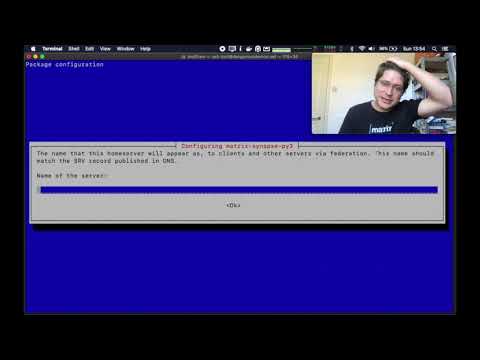
Recommended as a practical demonstration that self-hosting a Matrix server is fairly easy, even on a small droplet.

HN cites it as a firsthand account of how dysfunctional large IT projects can be, with about 50 contractors and no one in charge.

HN shares it as a classic backup and operations cautionary tale.

Pointed to in GitHub Actions threads as a well-argued critique of how brittle and confused the platform is.

HN recommends it for Hightower's clear mental models, such as comparing the scheduler to Tetris and explaining why resource limits matter.

Pointed to as a rare look at how a tiny engineering team ran WhatsApp's massive scale on FreeBSD and Erlang.

HN points to it as an entertaining deep dive on Linux emulation on SmartOS and on how the Solaris kernel and libc are tightly coupled.

HN commenters recommend it for showing the tooling possible when schemas and APIs are treated as code.

Pointed to as a credible, engineering-informed answer to whether space data centers are feasible, from someone with deep space knowledge.

HN recommends it as an entertaining first-hand engineer account of what went wrong with healthcare.gov and how it was fixed, including that no one owned the whole site.

HN points to it as an authoritative overview of AWS infrastructure, including what AZs and regions really mean.

HN regards it as a pivotal early talk in the DevOps movement and the original source for the idea.

The go-to reference for ChatOps, recommended for the idea of chat as a shared command line where teammates learn by watching.

HN cites it as the authoritative description of Lambda internals and isolation, by the engineers who built it.

Pointed to as a look at Hetzner's unusual semi-custom server hardware and cooling.

HN points to it as an illuminating look at what containers really are and as a video companion to running desktop apps in Docker.

Recommended in orbital data center threads as a sober explanation of why the idea doesn't work out economically or thermally.

Shared as comic relief that hits close to home for people who work with infrastructure at scale.

Recommended as the source on how Compiler Explorer began and for its lesser-known features like the machine code analyzer.

It is the go-to reference whenever HN discusses cell-based architecture and outage isolation, as an explanation straight from AWS engineers.

HN commenters point to it as the historic first Docker demo and a quick overview of what Docker is.

HN points to it as an authoritative look at DynamoDB internals and as evidence it is a complex distributed system.

Cited for the history of why containers and Kubernetes took off, though one thread critiqued the documentary itself.

HN mostly cites it as an ironic bit of history, since Oracle later pivoted hard to the cloud.

HN links it as the historical source for two projects: Hy's first announcement and the earliest recorded Docker talk.

Used as a shorthand joke for Google-scale bureaucracy and the difficulty of simple tasks at large companies.

Recommended as Rick Houlihan's definitive talk on modeling relational-style data in DynamoDB.

Cited as the memorable case for moving to SSDs and as an example of how swearing can make a talk stick.

Mostly cited as a source for details of Cloudflare's architecture, such as LuaJIT-based request inspection and request volumes.

HN points to it as insight into how AWS thinks about distributed systems and the difficulty of consensus.

Cited as a primary source for Google building its own switches and running OpenFlow in production.

HN commenters cite it as a primary source for facts such as Amazon.com running on AWS and its very frequent deployments.

Cited as the primary source on how Nitro offloads I/O to dedicated hardware and keeps management tasks off guest CPUs.

Cited in backup and data-loss threads as a rare inside look at Google's backup practices, including its use of tape.

HN refers to it as an honest, candid account of the common story of losing precious data to storage failure.

Cited as a technical look at how Tesla's VPPs and Autobidder work as distributed systems.

HN points to it for Hamilton's datacenter cost breakdown and as a primary source for claims about power versus hardware costs.

Referenced in security discussions as an example of defense-in-depth sandboxing for a desktop Linux environment.

Shared as a funny, accurate retelling of a classic outage, especially on a bad ops day.

HN treats it as a beloved piece of tech-workplace humor, quoted whenever an outage or sales-versus-engineering friction comes up.

HN mentions it mainly as an example of Hightower's live-demo keynotes and a demo of pull-request-driven promotion and deployment.

HN cites it as an example of workload-dependent performance tuning at scale and of Netflix's AWS practices.

HN cites it as the example of physically trucking data when network transfer is impractical.

Used as a joke whenever companies chase tech buzzwords, from cloud to AI.

Mentioned as a real-world example that microservices can work at scale, though commenters are lukewarm and unsure it matches what they remember.

Mostly linked by a company in its recurring hiring posts as a tech talk showing its approach, rather than recommended by commenters.

Posted as a running joke whenever Docker, containers or frustrating software come up, not as something to learn from.

The speaker and others cite it in threads about malicious packages and typosquatting.

Cited as a real-world enterprise Java example, especially for JDK upgrades and ZGC results.

Cited as a classic Cantrill talk when threads discuss madvise, malloc and Dirty COW behavior.

Cited as evidence that the KVM port was hard work and as background on Cantrill's illumos virtualization experience.

HN cites it only for specific moments, such as the live Spanner resize demo, the Jamboard demo and the Titan announcement.

Referenced in discussions of GPU virtualization and VDI as a demo of licensing-free GPU sharing.

HN treats it as the classic example of moving a live server with zero downtime, brought up whenever the topic of uninterrupted migration comes up.

Cited as a source for Ellison's comments about Amazon and Oracle, usually in threads about Amazon migrating off Oracle, and often critically.

Cited as an example of data hoarders testing Google's unlimited storage and of Google rate limiting heavy use.
Which of these have you already seen?
Connect YouTube and HackerTube AI hides what you've watched and ranks the rest for you.