
HN commenters recommended it for years as a simple, exciting overview of the deep learning wave.
Topics › AI, Machine Learning & Data
The best computer vision, speech & nlp videos, according to Hacker News
92 videos about computer vision, speech & nlp that Hacker News commenters keep pointing each other to, ranked by how many separate months they were recommended. Part of AI, Machine Learning & Data.

It is the go-to recommendation whenever someone asks about voice coding or RSI-friendly programming setups.

HN repeatedly points to it as the best public technical overview of Tesla's FSD approach, used both to defend and to critique Tesla's progress.

Repeatedly called an excellent, practical introduction that covers a lot in two hours and explains issues academic textbooks skip.

HN recommends it as an easy, clear intro to the DCT that finally made it click for several commenters.

Recommended as one of the best explanations of Fourier transforms and a clear demo of analog optical computing.

Recommended as the best deep dive on tokenizers, worth the two hours for anyone working with LLMs.

HN commenters recommend it as the clearest account of human computation and games with a purpose, straight from the inventor.

HN treats it as the go-to overview of Flock's problems, and cites it in nearly every Flock thread.
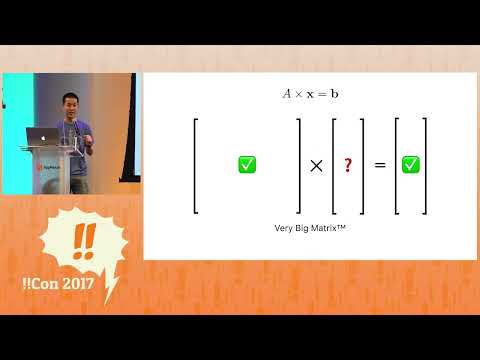
HN commenters recommend it as a fun, short talk that shows how HDR photography actually works through an absurdly playful implementation.

Regarded as the seminal talk on Dasher, recommended in threads on accessible and alternative text input.

Recommended as a clear explanation of why RNNs fall short and how transformers solve it.

Cited whenever threads discuss recovering hidden images or non-line-of-sight imaging, as a clear demonstration of light transport.

Recommended as one of the best free courses for learning modern deep learning for NLP.

Recommended as a fun, semi-technical intro to machine learning that holds kids' attention.

HN commenters cite it in Tesla threads as the primary-source explanation of why Tesla removed radar and how its vision depth estimation works.

HN recommends it as the clear explanation of why Google's statistical, data-first approach works.

Recommended as a favorite tech talk showing how huge data availability changes how problems are approached.

HN recommends it as an accessible introduction to Gaussian splats, made by people who understand the subject.

Recommended in address and OCR threads as a look at the last human mail-coding operation.

HN recommends it as the canonical talking-piano example, uncanny and impressive once you read the captions.

Pointed to as an accessible early explanation of transformers and attention for newcomers.

Cited as a demo of GPU-powered noise suppression that works remarkably well, in threads on mic muting and speech enhancement.

HN commenters bring it up in book-scanning threads as an impressive non-destructive method that is not commercially available.

HN considers the course one of the best hands-on ways into deep learning, praising the code-first teaching style.

HN commenters share it as a favorite example of upscaled vintage footage that makes the early 1900s feel present, though some find the colorization off.

HN viewers were impressed by its speed and saw it as a glimpse of the future of voice search; later it appears in hiring posts.

HN recalls it as a mind-blowing pre-AI demo of 2D-to-3D object extraction.

HN loves it as a funny, inspiring hobby project and calls it one of the best conference talks ever.

HN recommends it as a technical talk aimed at a real engineering audience, with live demos of perception and pre-mapped roads.

Pointed to as the long-form interview for understanding Lenat's work, especially after his death.

HN cites it as the early example of voice cloning and audio deepfakes, with some recommending Peele's reaction and others calling the demo fake or never shipped.

HN recommends it as the best overview of Cursorless, likened to vim with your voice, and relevant to accessibility and voice coding discussions.
HN points to it as the accessible explanation of why glitch tokens exist whenever tokenizers or odd GPT behavior come up.

HN people recommend it as a look at how to get people to eagerly do useful collective work, and as the origin of Duolingo.

HN points to it as proof that offline TTS can sound natural, relevant to private voice assistant alternatives.

HN points to it as an impressive example of ML-based video restoration, and as the test case in the debate over whether upscaling historical footage is respectful or misleading.

Recommended as Hinton's own explanation of capsule networks and his critique of pooling in CNNs.

HN recommends the CS231n lectures as a solid, applied deep learning course for self-study.

Recommended as an accessible technical explanation of Mobileye's approach, and also cited in disputes over Tesla Autopilot.

HN lists it as a free, brilliant introduction to deep learning and computer vision, often within ML self-study plans.

Posted as the obligatory joke in any thread about speech recognition, and recommended in a thread on what makes people laugh.

Recommended as a great technical talk from the pioneer of human computation.

Pointed to in metaverse and VR threads as proof that realtime photorealistic face tracking from headset cameras is coming.

HN cites it as an example of what 1kHz vision and fast control loops enable, in threads about AI hardware and robotics.

HN found it a nifty demo and cites it as a primitive but effective learning tracker that predates modern deep-learning trackers.

HN points to it as an intuitive way to see what hidden layers of a convnet learn, and as a reference for hierarchical feature learning.

Cited as a vivid demonstration of the scale of Chinese state surveillance, especially in TikTok and privacy debates.

HN commenters cite it as the classic demonstration of audio recovery from video in surveillance and privacy discussions.

HN cites it as the primary source for Tesla's vision-only reasoning, LIDAR arguments and sensor fusion challenges.

HN cites it as an early impressive real-time speech translation demo, often in discussions of voice-preserving translation and later AI demos.

HN mentions it as an example of voice-driven editing, and one commenter says it clarified how Vim commands compose.

HN points to it as the clearest and most striking explanation of femto-photography, with animations that make it easy to follow whenever related imaging stories appear.

HN cites it for the look of pre-car city streets, with pedestrians moving freely among carriages, and as an example of AI film restoration.

HN cites it as the landmark brain-decoding demo and compares newer reconstruction work against it.

HN commenters flag it as a remarkable machine-learning result, notably for showing that training on raw images beats JPEG.

Pointed to as an approachable layperson's explanation whenever video magnification or vibration visualization comes up.

Cited in threads on motorcycle safety, Tesla's sensor choices and autonomous vehicles as a well-made explanation of the failure mode.

Invoked as a joke whenever AI image reconstruction or enhancement is discussed.

Cited as a vivid example of machines outpacing human reaction times and of high-speed robotic vision.

HN uses it as shorthand for the unrealistic 'zoom and enhance' trope, in jokes about image restoration and software that claims to recover detail.

Cited as an expert's first-hand evidence that GPT translation is near human quality for distant language pairs.

HN links it as an informed view from a working translator on using GPT for translation.

Cited in autonomy debates as evidence that autonomous take-off aircraft exist and as an example of vision-based line following.

Posted by an employee as a showcase of a polished desktop application, with a JavaFX UI, built by a small team.

Mostly a running joke or reference for image-classification projects and AI app demos.

Cited as a concrete early example that AI-faked video was already convincing, in discussions of misinformation and trust in media.

Mostly cited as an example of an overhyped or possibly staged AI demo, alongside later skeptical comparisons to other company demos.

HN cites it in discussions of reconstructing images from brain scans and the ethics of future brain reading.

Used as a running joke in discussions of programming by voice.

HN uses it as a punchline in threads about image upscaling and super-resolution, where the movie trope has become partly real.

Cited as the classic, unintentionally hilarious example of early voice recognition failing, and of how dictation used to feel.

Referenced as the original demo that stunned people when object-removal and image-inpainting algorithms come up.

Used as a joke whenever voice interfaces and accents come up, and shared as a Scottish comedy sample.

Cited as the canonical demonstration of pulling out invisible signals like pulse from video, with commenters imagining other applications.

HN references it as a demo of Project Tango's computer vision, including its use of monocular structure from motion.

HN uses it as a baseline for how capable Siri seemed at launch and to argue the product has regressed since.

HN references it as evidence that pedestrian-detecting emergency braking is routinely tested by independent agencies.

HN invokes it as the go-to joke whenever voice interfaces, speech recognition or natural-language UIs are discussed.

HN cites it as a historic demonstration of early speech synthesis, including discussions about whether the demo was genuine.

Mostly invoked as a joke in threads about monkeys or darts beating professional stock pickers, and about loose definitions of AI.

Used as a joke or critique whenever someone expects impossible image upscaling or recovery of detail.

HN cites it as proof that voice coding works and lists it among resources for programmers who can't type.

HN commenters cite it as proof that autonomous driving was demonstrated decades before the current boom.

HN brings it up as an early, impressive augmented-reality translation demo and a wow moment before modern AI.

Cited as an example of how realistic GAN-generated faces had become, and of what a well-structured latent space can do.

HN uses it as a reference point in deepfake and fake-news discussions, showing that convincing real-time video manipulation was already possible in 2016.

Used as the canonical reference for the 'enhance' trope whenever image upscaling or recognition comes up.

HN cites it as the standard example of algorithmic bias in face detection and of how skewed training data produces biased tech.

Cited as an early, concrete example of AI outperforming top GeoGuessr players, in threads on AI photo geolocation.

HN cites it as an early demo of generating 3D models just by filming an object, in threads on Kinect, 3D printing and depth cameras.

Linked as a memorable early demo of image deblurring whenever threads on image restoration or synthesis come up.
Which of these have you already seen?
Connect YouTube and HackerTube AI hides what you've watched and ranks the rest for you.