
HN commenters repeatedly say it changed how they hear political speech and recommend it for understanding why opponents are not simply stupid.
Topics › Life Sciences, Mind & Health
The best consciousness & cognition videos, according to Hacker News
60 videos about consciousness & cognition that Hacker News commenters keep pointing each other to, ranked by how many separate months they were recommended. Part of Life Sciences, Mind & Health.

HN regularly calls it mind-blowing and recommends it as an introduction to Levin's work on bioelectricity and regeneration.

HN regulars treat it as an essential, fun Hofstadter talk for any discussion of concepts, analogy and metaphor.

HN commenters call it a beloved story and link the animation when threads touch on consciousness, empathy or identity.

HN recommends the series as a thorough, non-dogmatic look at meaning, spirituality and escaping nihilism.

HN returns to it constantly in consciousness and decision-making threads as a clear, entertaining explanation of split-brain.

HN recommends it as a famous, revealing clash between two thinkers, though some note they largely talk past each other.

Praised as a long but rewarding conversation, with commenters especially liking Bach's emphasis on modelling as a skill and his bridge between mind and computation.

HN commenters recommend it as a clear, in-depth lecture on consciousness as a process of prediction.

HN points to it constantly in threads on inner monologue, visual versus verbal thinking and communication as the classic, entertaining demonstration that minds work differently.

Cited as an excellent entry point to Dennett's thinking on minds, memes and competence without comprehension.

HN recommends it as a fascinating, mind-expanding interview on bioelectricity and non-reductionist biology.

Recommended in threads on consciousness, anesthesia and perception as a fascinating look at how much of experience the brain constructs.

Cited as the origin of the 'culture/philosophy as operating system' metaphor and as a quick introduction to McKenna's ideas.

HN recommends it as a clear explanation of why generations think differently and why IQ scores have risen.

Recommended for its account of competence without comprehension, relevant to evolution and to debates about AI.

It is one of the few long, candid interviews with the famously reclusive McCarthy, and commenters share it whenever he comes up.

Recommended as a vivid first-person view of the right hemisphere in control, often linked to meditation and non-dual experience.

HN points to it in origin-of-life and complexity threads as a fascinating long-form introduction to assembly theory.
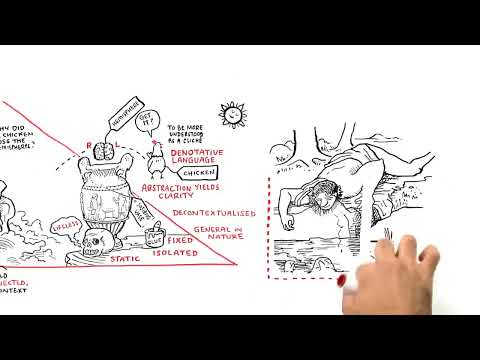
Recommended as an accessible animated introduction to McGilchrist's thesis on hemispheres and narrow versus diffuse attention.

HN commenters call it lucid and fluff-free, and point to Bach as one of the most interesting voices on AI, consciousness and philosophy.

Cited in discussions of perception, consciousness and what is real, though some commenters find his conclusions hand-wavy.

Recommended as a good high-level view of Humphrey's book and his argument on how consciousness evolved.

Pointed to in consciousness and AI threads as the best-known statement of Penrose's view, which commenters find interesting even when they disagree.

HN commenters use it as supporting material in arguments about IQ and the g-factor view of intelligence.

HN recommends it as an inspiring summary of a computational model of mind and a first lecture in a series on the brain as a computer.

HN commenters point to it as an interesting lecture related to psychedelics, brain geometry and hyperbolic space, with a good intro to hyperbolic geometry.

HN recommends it as an accessible walkthrough of Penrose's ideas on consciousness and cosmology, interesting even if debatable.

Recommended as a lucid, insightful lecture on the limits of human knowledge and the study of mind, one commenter calling it among the best lectures ever.

Offered as a high-level, approachable introduction to Friston's idea of the brain as a prediction machine.

Cited to explain the default mode network and how meditation may quiet it.

Recommended as one of the best bridges between mind and computation, and as a sample of Bach's thinking on AI and philosophy.

Cited in discussions of analogy-making in science, and revisited by fans of Hofstadter.

HN points to it as a vivid first-person description of aphantasia and an example of an aphantasic artist.

HN commenters recommend watching it to hear his side directly, noting he comes across as coherent, while others dispute his sincerity.

HN commenters point to it as a presentation of the Penrose-Hameroff theory of consciousness, which some find compelling.

Recommended as a short, fascinating introduction to how simple sensor-actuator machines can appear intelligent.
HN links it as an accessible visual explanation of the problem of mapping brain connectivity.

HN commenters cite it for the social theory that reasoning evolved as a collaborative activity, and one lists it as a favorite video.

Recommended in threads about consciousness and reality as a clear exposition of the Vedantic view of waking, dreaming and deep sleep.

HN points people to it as an accessible explanation of what qualia are.

HN recommends it as a short route to Dennett's view of consciousness as a bag of tricks, often in AI and cognition threads.

HN cites it whenever threads touch consciousness, perception or predictive-processing, especially for its examples of expectation changing what you perceive.

Pointed to in threads about mind uploading and teleportation as a good, accessible look at personal identity.

HN links it as a long-form entry point to Levin's ideas on cancer, bioelectric signaling and intelligence beyond the brain, though one commenter finds some claims outlandish.

Used as a source for Searle's own argument in Chinese room discussions, though some find nothing new in it.

Pointed to as a clear, balanced overview of quantum-brain theories when AI consciousness and brain models come up.

HN commenters point to it as a clear explanation of Bell's theorem and superdeterminism, though some criticize it as knocking down strawmen.

HN refers to it as a vivid first-person account of anendophasia whenever inner monologues come up.

Pointed to as an accessible introduction to intuition pumps as thinking tools, and shared in remembrance after Dennett's death.

Linked as a concise, accessible rebuttal whenever linguistic relativity comes up in a thread.

HN readers point to it as a companion to other Levin material on bioelectricity, goal-directedness in cells and cancer as a breakdown in cell communication.

HN points to it when discussing DMT research and reports of contact with entity-like beings.

Almost entirely one commenter's repeated citation as evidence on unconscious thinking and flawed reasoning.

HN uses it in AI and consciousness debates as a memorable take on why general intelligence is hard to define.

HN uses it as an early authoritative take in debates about AI, reasoning, and AGI.

HN commenters use it as a fun, accessible demonstration that color perception depends on surrounding patterns and that what we see differs from what the eyes register.

Linked in simulation-hypothesis threads as an expert panel that takes the idea seriously, and listed among best technical talks.

HN links it as the clearest demonstration that crows can fashion tools.

HN invokes it as a quick reference in discussions of AI-generated content and indistinguishable AI output.
Which of these have you already seen?
Connect YouTube and HackerTube AI hides what you've watched and ranks the rest for you.