
HN considers it the best experimental rebuttal and clarification of the Veritasium wire debate, with real measurements.
Topics › Physics, Space & Chemistry
The best fundamental physics videos, according to Hacker News
164 videos about fundamental physics that Hacker News commenters keep pointing each other to, ranked by how many separate months they were recommended. Part of Physics, Space & Chemistry.

HN commenters send people to it whenever a thread confuses the speed of light with a light-specific limit, and several say it deepened their understanding of relativity.

Used as the standard reference in threads about light speed, clock synchronization and untestable assumptions in physics.

HN people recommend it as a masterclass in explaining physics clearly without condescension, accessible without formal training.

HN commenters point to it as an equation-free, charming way to hear Feynman explain physics to laypeople, including his famous refusal to explain magnetism with simple analogies.

Called the best visualization of general relativity by many commenters, who say it cleared up long-held misunderstandings of gravity.

Called a favorite and a masterpiece by commenters as the clearest accessible explanation that there are only waves in fields, and what physics still doesn't know.

HN commenters point to it as a lucid, general-audience lecture that shows how wrong common conceptions of time are, often in threads on entropy and the arrow of time.

HN commenters recommend it as a short, clear explanation of why moving charges create magnetic fields.

HN commenters recommend the series as engaging, substantial physics with just enough math for non-specialists.

Often recommended as an eye-opening field-based explanation of electricity, though it was also controversial and criticized as pedantic.
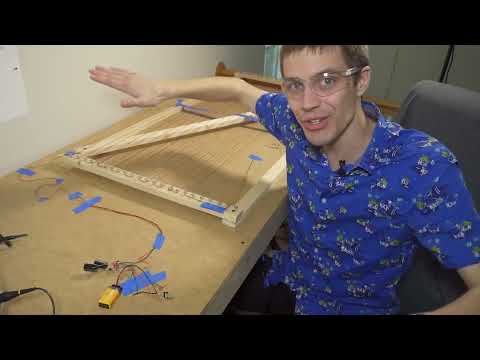
Praised as the clearest visual explanation of transmission lines, impedance and signal propagation, with several commenters saying it made it all click.

HN returns to it as a model of intellectual honesty and good explanation, often linking it in discussions of why-questions and science communication.

Recommended as an engaging critique of string theory hype and its effect on public trust in physics, and often cited alongside Peter Woit's writing.

HN commenters recommend it as one of Veritasium's best videos and one that has aged well.

HN considers it among the clearest accessible explanations of what refractive index actually is and how light moves through transparent matter.

HN links it as a go-to intuitive explanation whenever gravity as spacetime curvature or free fall comes up.

HN commenters point to it as an approachable explanation of how symmetries give rise to conservation laws, including the story of Emmy Noether.

Cited constantly as the classic answer to 'why' questions, on explanation, frames of reference and the limits of physics.

Recommended as an entertaining, accessible way to get a feel for light and electric fields.

Recommended in kilogram-redefinition threads as a clear, short explainer of the Avogadro and Planck approaches.

Recommended as a short, joyful example of Feynman's accessible way of explaining physics, which a transcript cannot capture.

HN recommends it as an entertaining, clear explanation of nuclear weapons basics from a policy expert.

HN links it in threads on bikes, countersteering and control systems as the clearest demonstration of how bikes actually steer and balance.

HN commenters say it made entropy intuition click and point to it in threads on energy, heat and equilibrium.

Recommended as the cleanest visual explanation of time and space switching roles past the horizon, and a gateway to the channel's black hole videos.

It is the go-to accessible explainer whenever HN discusses Helion or alternative fusion designs.

HN points to it as an accessible long-form introduction to Wolfram's ideas and a window into his passion, though some are critical of his claims.

Recommended for correctly predicting the features of the real black hole image and clearly explaining the lensing physics behind it.

HN commenters recommend it as an accessible introduction to scaling laws and to why cities keep growing while companies and organisms eventually die.

Praised as an excellent, accessible account of why the kilogram's definition changed, in redefinition threads.

HN uses it as the primary source for Weinstein's theory, though some commenters note he never published a full math paper.

HN recommends it, and the whole channel, as a clear and deeper-than-usual physics explainer.

Strongly recommended for its funny, human account of Los Alamos, which one commenter calls almost a stand-up act.

HN recommends it as an accessible way into Wolfram's physics ideas and his personality.

HN recommends it as a clear argument for why deep and cheap learning succeeds, often alongside the associated paper.

HN points to it as a short, approachable starting point on warp drive physics from a channel commenters like.

HN commenters call it the best explanation of how holograms work, and one says it transformed their understanding.

HN recommends it as the best non-mathematical explanation of the Higgs field, deep but accessible to lay viewers.

HN returns to it constantly as a classic on the difficulty of explaining fundamentals and the limits of analogies.

HN commenters point to it as a credible debunking of the popular but wrong explanations of how wings generate lift.

HN recommends it as a sobering counterpoint to the Feynman myth for people whose view comes from Surely You're Joking.

HN recommends it as the clearest intuitive introduction to thinking about a fourth dimension.
HN commenters point to the PBS Space Time series as a high-quality, bite-sized way to learn modern physics concepts.

Recommended as high-quality physics communication and as an introduction to Noether and energy non-conservation in cosmology.

Commenters call it a short, clean, visual explanation of the infalling-particle question and of Penrose diagrams.

Cited as the best explanation of mirror reversal.

HN cites it for the field-based picture of power transfer, noting it was controversial at release but the experiment largely backed the creator.

Recommended as an intense, insightful look at Bussard's IEC fusion work, frequently cited in fusion threads for his claim that it could be developed for about $200M.

HN commenters link it as a quick, intuitive explanation of angular momentum and why spinning clumps of matter flatten.

HN uses it as a quick, clear demonstration of the Magnus effect behind spinning-cylinder ships and planes.

Recommended as the clearest footage of a whip tip going supersonic, and cited in shockwave discussions.

HN commenters link it to correct the widespread misconception about why light slows in a medium.

HN recommends it for Feynman's intuitive explanations and his joy in understanding how things work.

HN points to it for a clear explanation of photon sieves versus Fresnel lenses and for showing what interference patterns actually look like.

Frequently linked whenever wind-powered vehicles come up, as the clearest visual explanation of how the craft works.

HN recommends it as an accessible walkthrough of Penrose's ideas on consciousness and cosmology, interesting even if debatable.

HN recommends Susskind as a very good explainer who uses real math at an accessible level, and links this lecture series for self-learners.

HN commenters find the hypothesis elegant and the channel consistently thought-provoking, and point to it in threads on light, particles and wave functions.

HN recommends it as an accessible layperson's introduction to the Reynolds number and fluid dynamics scales.

Praised for its visualizations and pedagogy in threads about physics and differential geometry.

Linked as clear demonstrations that make the counterintuitive faster-than-wind result click.

It comes up as a great explainer on magnetohydrodynamic drives and pumps in threads about silent submarine propulsion.

HN quotes it as the crispest statement of what science is, usually when a theory clashes with evidence.

Mentioned as a fun and impressive Feynman documentary, though the mentions are brief.

HN rates the series as one of the best physics lecture courses on YouTube, with an engaging format and historical context.

Cited in discussions of analogy-making in science, and revisited by fans of Hofstadter.

HN recommends it as a good layperson explanation of how LIGO's detection works and why it is so hard.

HN commenters recommend it as a clear explanation of why time runs one way, from a leading physicist.

HN commenters call it eye-opening and deeper than typical layman explanations, linking it in double-slit and mechanics threads.

Cited constantly when discussing explaining to non-experts, the limits of explanation and what a 'why' question really asks.

Cited in threads on probability and quantum theory as a strong argument that probabilities can be eliminated from physics.

HN points to it as a detailed explanation of Wolfram's physics hypothesis, and for Wolfram's evident passion, though some find it long.

HN commenters recommend it as an easy-to-digest explanation of time dilation and the twin paradox.

Used as a go-to reference for relativity arguments, such as spacetime intervals being the same for all observers, and as a suggested follow-up for physics fans.

HN refers to it for Weinstein's views on advanced math and physics and academia's problems, though some find him a bit kooky.

Recommended as the best introduction to SICM and sicmutils and a showcase of what such symbolic systems can do.

Commenters recommend it for a compelling, accessible case against treating the speed of light as a hard limit.

HN cites it in energy debates as an illustration of the long-term thermal limits of exponential energy consumption growth.

HN recommends it as an even-handed physicist's take for 5G skeptics, noting it is probably safe but under-studied.

HN points to it as a convincing energy-budget analysis in debates over space datacenters, while debating its assumptions.

HN commenters point to it as an accessible pop-science introduction to entropy and the physics of life, including Jeremy England's work.

HN points to it in warp drive discussions as a math-free explanation of why superluminal travel causes causality problems.

HN users cite it in threads about academia, grant incentives, fraud and women-only programs, often as an eye-opening personal take.

HN points to it whenever a thread mixes up power and energy, such as battery specs and solar generation.

Recommended as a good visual walkthrough of the Standard Model equation for people who want to understand its terms.

HN commenters use it to put radiation exposure and risk into perspective, including everyday sources like flights and smoking.

HN recommends it as a cool, eye-opening look at the hidden ultraviolet world, especially in sunscreen and vitamin D threads.

HN brings it up whenever thermodynamics or entropy comes up, as the classic comic explanation of the laws.

HN commenters recommend it for its fluid dynamics of detonation waves and its high-speed imaging of rotating pulses.

HN uses it to illustrate Feynman's wry view of philosophical questions and perception.

HN commenters recommend it as a helpful way to conceptualize why light speed is a limit.

Linked as the clear explainer on rotational gravity and its Coriolis oddities.

HN people link it as a quick, clear answer to the question of bicycle stability, including in threads on bike mathematics.

The reference people reach for when debating how math differs from physics.

Recommended for a math-heavy but thorough treatment of the ultraviolet catastrophe and the history of the experiments.

Linked as a quick, clear primer when black hole energy and efficiency come up.

HN commenters recommend it for the Gell-Mann amnesia framing and as a skeptical take on Michio Kaku.

HN people cite it as the clearest layperson-friendly explanation of rotational instability whenever spinning bodies, tumbling objects or axis shifts come up.

Praised as a jargon-light talk on advanced physics that HN cites when arguing spacetime is not fundamental.

HN uses it as a reference in threads on physics theories, models and what real understanding means.

Recommended as a good explanation of what happens when gravity acts on an object.

Recommended as a fantastic, scientist-led explanation of snowflake formation.

HN returns to it as a reminder to stay humble and as a source of Feynman's view on awards and prestige.

HN commenters recommend it as the more rigorous, polite and complete treatment of the Veritasium puzzle, though one dissents that the original misleads people.

Recommended as a lecture so clear that no formal training is needed to follow it, and cited on why math is needed for physics.

Cited in threads about science funding and trust in research as an angry insider critique of academic incentives, though some commenters doubt it.

Commenters cite it as a classic of physics lectures for laypeople that they watch and rewatch, though the audio quality is noted as poor.

Brought up whenever latency, light speed or the size of a nanosecond comes up, as the classic physical demonstration.

HN points to it as an example of a YouTuber getting radioactive scam products delisted by reporting them to the NRC.

HN points to it as a clear explanation of the evidence that gravity does not propagate into extra dimensions.

HN points to it when discussing nanobots and microscale physics, including how things behave at tiny scales.

Cited as the canonical eye-catching demo of diamagnetic levitation, and sometimes used as a joke in magnet threads.

Commenters link it whenever bit flips, cosmic ray errors or unexplained computer glitches come up, as a good accessible explanation.

HN cites it whenever the popular absorb-and-re-emit explanation comes up, as a source for the wave-interference account.

HN commenters share it as a clear explanation of the block universe and relativity of simultaneity.

It comes up in discussions of magnetohydrodynamic propulsion as a long explainer from an MHD specialist.

HN recommends it as an informative explanation of what those tags are, especially in threads about implants and RFID.

HN links it as the quick explanation of why you cannot just throw things into the Sun.

HN points to it as a cool demonstration of cheap precision laser measurement and the origin of hacks based on self-mixing.
Which of these have you already seen?
Connect YouTube and HackerTube AI hides what you've watched and ranks the rest for you.