
HN recommends it as the best readily available interview with Simons, notable for his emphasis on luck and a humble approach to success.
Topics › Business, Startups & Economics
The best investing & personal finance videos, according to Hacker News
75 videos about investing & personal finance that Hacker News commenters keep pointing each other to, ranked by how many separate months they were recommended. Part of Business, Startups & Economics.

Recommended as a thorough, sober critique of meme-stock culture and a good starting point whenever GameStop news appears.

HN regards it as a classic to revisit every few years for improving decisions and self-awareness.

HN points people to it as the clearest single video on simple, long-term index fund investing.

HN commenters repeatedly recommend it as the clearest explanation of regulatory capture, and cite it in threads on AI regulation, GDPR and telecom.

Recommended, often in Bitcoin and monetary threads, as a clear introduction to how the US money system works, though it comes with a strong goldbug slant.

HN cites the scene as a model of clear, decisive communication and of leaders acting fast to survive, and recommends the film as the best take on 2008.

Recommended as an accessible animated primer on banking and the Fed, usually with the caveat that it is biased and dated.

HN points to it for a clean first-order framework for the rent versus buy decision.

HN commenters recommend it as the best single, entertaining overview of Tether's dubious history, and cite it when arguing Tether lacks real USD backing.

Recommended as a free, first-principles finance course for software engineers wanting to learn business and finance.

HN recommends it to explain why comparing billionaire net worth by share price is misleading.

HN points to it as the source and best distillation of 'fuck you money', in threads about FIRE, windfalls, layoffs and financial literacy.
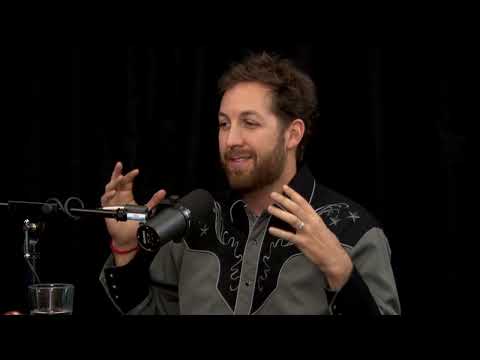
HN recommends it in startup video lists for its stories and Sacca's candid background.

HN users point to it to correct the 'money printer go brrr' view and as a clear explanation of how banks create money through loans.

HN recommends it as a good overview of predatory lending and the problems with payday loans.

HN commenters cite it whenever a thread touches on tax complexity, loopholes, or why companies like Intuit benefit from a convoluted tax system.

Recommended as a candid look at the real costs and paperwork of buying and renovating an abandoned Japanese home.

HN recommends it to beginners as a quick, clear overview of finance and investing fundamentals.

HN users share it as a short, accessible explainer for land value tax whenever housing, rents or inequality come up.

HN commenters point to it whenever airline economics or frequent-flier miles come up, since it clearly shows loyalty programs are worth more than the airlines themselves.

It is the standard citation in HN housing debates for showing that dense cities can still have affordable single-family homes.

HN recommends it as a detailed documentary on the Soros-versus-Bank-of-England episode.

Recommended as a clear, compact explainer on China's empty homes, ghost cities and property troubles.

HN links it in personal finance threads as an entertaining explanation of how fees erode retirement savings.

Recommended as detailed math on rent versus buy, showing the choice is often roughly a wash.

After the 2021 squeeze, HN cites it as the original thesis behind the GME story and praises its quality.

Recommended as a clear, roughly 30-minute summary of the problems with the SpaceX IPO.

HN posts it as a favorite comic summary of debt avoidance and spending discipline, and as a joke in buy-now-pay-later threads.

HN calls it a favorite startup video because it is packed with candid stories about Facebook, Twitter and Google.

HN users cite it as the explanation of the tricks around the IPO and the index-inclusion rule changes.

HN commenters cite it as a clear, numbers-based rent-vs-buy comparison when housing-as-investment debates come up.

Cited as an accessible depiction of how commodity trading and the trading pit work.

HN points to it as an informative account of how the 2008 crisis developed and spread, and of conflicts of interest among economists and bankers.

HN mentions it with caveats: despite the author's reputation, commenters say it contains good investing and Excel material.

HN recommends it as an insider-style look at quants and high-frequency trading and their effect on markets.

HN commenters point to it as good, accessible coverage of mobile-home park exploitation by private equity.

HN cites it as a famous example of someone publicly predicting the housing crash before it happened.

Pointed to as a concise explanation of land value tax and its effect on city finances.

Cited in housing threads for his rule-of-thumb rent-versus-buy analysis and the view that it is often a financial wash.

HN recommends it as a clear explanation of self-custody and of why to move coins off exchanges.

HN points to it in investing threads as an argument that passive index flows distort markets and could precede a crash.

HN links it whenever the discussion turns to layoffs, saving, and having enough financial independence to say no.

After the FTX collapse, commenters cited it as an early red flag, though others disliked the YouTuber's style.

HN uses it as the go-to explanation of why landlords refuse to renegotiate leases and leave units empty.

HN recommends it for Sacca's candid account of going deep into debt and recovering, in threads about failure and financial risk.

Cited in investing threads as a research-backed argument for diversifying beyond US equities, with sources in the description.

Shared as a clearer explanation of the tax loophole than the accompanying article.

Linked in threads on China's property glut as visual evidence of empty, investment-driven housing, later seen as foreshadowing Evergrande.

HN links it as the primary source for Buffett's bitcoin views and his argument about productive versus non-productive assets.

HN points to it as an interview with Housel and as the source of his quote that financial decisions happen at the dinner table, not on a spreadsheet.

Cited in threads about startups, VC and private equity as an insider's description of how VC economics work, though commenters note he is self-serving.

HN cites it for Chamath's claim that venture-backed growth resembles a Ponzi scheme, especially when startups spend heavily on big-tech advertising.

HN cites it as a view of Simons as a humble, pragmatic person, with the caveat that the host's questions are weak.

HN cites it in prediction-market threads as an accessible critical overview, including the Polymarket CEO's remarks on insider trading.

Shared as a short, interesting explainer on very long-lived financial instruments.

Cited as a quick, visual explanation of IEX's deliberate latency and of artificial delay as a fairness tool.

HN cites it as the source for the argument that safe withdrawal rates should be lower than 4%.

Cited for subprime auto loan statistics and as a reference for predatory car financing, rather than as a recommendation.
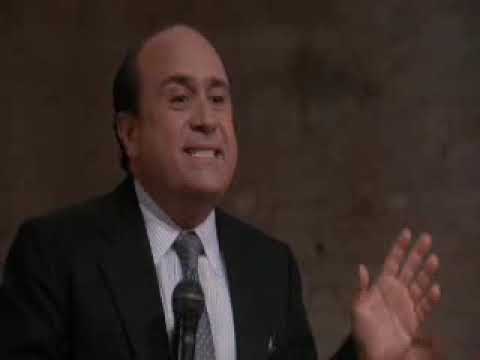
Quoted in threads about declining companies and shrinking markets as a blunt statement of the case for liquidation.

HN cites it for what SBF said himself, especially his claims about political donations and the backdoor allegation.

HN mines it for WhatsApp facts, such as pricing used to slow growth, a 7-8 person backend team and late hiring of customer service.

HN uses it as a reference for startup advice such as not befriending your VC, linear thinking in valuations, and protecting ideas.

Cited critically as an example of someone vouching for Mt. Gox just before its collapse.

Mostly invoked as a joke in threads about monkeys or darts beating professional stock pickers, and about loose definitions of AI.

Used as an anecdote in layoff and cost-cutting debates: the company supposedly never noticed what the fired staff had done.

Linked in career and burnout threads as shorthand for the freedom financial independence gives you.

HN cites it critically, as an example of Tether executives dodging questions about reserves and backing.

Referenced as a quick, entertaining overview of problems with credit reporting and scoring.

Cited, usually critically, as a window into how payment companies view cryptocurrency and cash.

HN quotes it mainly to mock or criticize Cramer, or as him admitting to manipulation on air, not as a recommendation.

HN mostly cites it as a joke or as a prior example of inflating a company's valuation through a small share sale.

Used as a classic analogy for fractional reserve banking and bank runs.

Mostly cited as a reference for watching Shkreli use spreadsheets, not as a recommendation.

HN mostly cites it for specific anecdotes, such as Thiel's early Facebook investment and how he thinks about the future, not as a general recommendation.
Which of these have you already seen?
Connect YouTube and HackerTube AI hides what you've watched and ranks the rest for you.