
HN treats it as a top-tier programming talk for learning refactoring and for the wrong-abstraction principle, recommended repeatedly over a decade.
Topics › Software Engineering & Languages
The best testing, debugging & developer tools videos, according to Hacker News
150 videos about testing, debugging & developer tools that Hacker News commenters keep pointing each other to, ranked by how many separate months they were recommended. Part of Software Engineering & Languages.

HN treats it as the canonical talk on simulation testing and a mind-blowing example of how far rigorous testing can go.

HN repeatedly calls it the best talk on testing, and many say it changed how they approach tests, mocks and the meaning of a unit.

It is HN's go-to recommendation for the case that programming environments should give instant feedback, and it appears in nearly every thread on live coding, visual programming or developer tools.

HN repeatedly recommends it as a fantastic demonstration of procedural, OOP and FP approaches to the same problem, and of functional core and imperative shell.

A perennial HN recommendation for outage and postmortem threads, praised as funny, educational and one of the best postmortems anyone has seen.

It is the standard recommendation for anyone puzzled by unexplained benchmark changes from tiny code edits, and for learning about causal profiling.

HN points people to it as the best introduction to Acme and its very different take on editors, shells, and GUIs.

The canonical recommendation whenever percentiles, tail latency, load testing or averages come up, described by some as life changing.

HN recommends it as the canonical presentation of 'functional core, imperative shell' and a practical answer to unit versus integration testing.

Recurs in threads about RSI, accessibility and voice coding as the go-to demo of a custom spoken command language.

HN treats it as the canonical talk for the case that vanilla Vim goes a long way and plugin dependencies are a burden.

HN frequently calls it the best single video on git because it teaches the underlying data structures.

HN people point to it as the best demonstration of literate devops, showing documentation and execution woven together in Emacs.

Seen as the canonical Redux introduction and a model live-coding talk about better developer tools.

HN repeatedly recommends it as the talk that finally makes git's data model click for beginners, despite its odd title.

HN recommends it as a quick, compelling look at what Smalltalk tooling feels like, especially for Ruby programmers.

HN returns to it constantly as the talk on live programming and what modern tooling is missing, though a few found it too much.

Repeatedly called the best video introduction to Vim's underlying model.

It is the canonical reference for the claim that modern software wastes hardware, and the proof-of-concept behind the Windows Terminal performance debate.

Repeatedly offered as the quickest, most convincing demo of structured editing and why Lisp programmers love paredit.

It is the go-to recommendation whenever someone asks about voice coding or RSI-friendly programming setups.

It is the go-to funny, irreverent critique of notebooks, linked whenever HN debates notebooks versus testable code.

HN recommends it as the fastest way to understand what VisiData can do, since seeing it work is clearer than reading about it.

HN recommends it as an entertaining, mind-blowing look at compiler cleverness from a great speaker.

HN recommends it as a lasting philosophy for improving your editing process incrementally, and it was widely remembered after Moolenaar's death.

Recommended whenever versioning, semver, monorepos and backward compatibility are debated, for its nuanced treatment of dependencies.

Repeatedly recommended as the canonical demo of org-mode for literate programming and reproducible research.

Called a classic CCC talk, and the Xerox bug is cited as a cautionary tale about trusting scans and digitized archives.

Whenever notebooks get criticized, HN commenters point to it as the standard rebuttal from a prominent practitioner.

HN points to it as a practical way to separate business logic from I/O, which reduces mocking and underlies the functional core, imperative shell idea.

HN recommends it to Vim users considering Emacs, and several say it persuaded them or their coworkers to switch.

Recommended as a fast, brilliant introduction to GDB's TUI mode and lesser-known features, useful for anyone who has only used IDE debuggers.

HN commenters, including TigerBeetle people, recommend it as the explanation of a methodology for building defect-free, high-assurance software.

HN people point to it as the clearest explanation of what FRP actually means and how its flavors differ.

HN recommends it as an enthusiastic demo of spreadsheet-like reactive notebooks, which commenters think new notebook projects should copy.

A perennial HN favorite whenever firmware, disks, ECC or opaque hardware come up, valued as both entertaining and sobering.

HN regards it as the best introduction and advertisement for Org-mode, and many say it was enough to get them started with it.

Held up in debugger and tooling threads as an amazing ideal of a tight feedback loop and what debugging could be.

HN regards it as a gem of a technical talk that tackles a fundamental debugging problem and shows a new technology solving it.

HN recommends it as an incredible talk whose testing principles apply beyond Ruby.

Commenters credit it with opening their eyes to JSPM and using it to choose build systems.

Recommended as a favorite talk showing Emacs as a writing environment rather than just a programmer's editor.

HN commenters point to it as the best practical introduction to Alloy and to lightweight formal modeling.

HN recommends it as an excellent talk on generalizing deterministic simulation testing, and Antithesis hiring posts link it to explain the work.

HN commenters call it the best i3 tutorial on YouTube and recommend it for getting started thoroughly.

HN points to it as a demonstration of what fast, well-built developer tooling looks like and of why a debugger beats print statements.

HN users share it as the quick demo that shows what Magit can do, for people unfamiliar with it.

HN recommends it as a talk that changed how people debug, worth rewatching periodically.

Recommended as the quickest way to see what TeXmacs can do, as a WYSIWYG alternative to LaTeX.

HN points to it as the best explanation of tree-sitter's design choices and as an accessible introduction to parser generators.
HN refers to it as the main public description of Google's internal code analysis tooling, and as a precursor of ideas like LSP.

Recommended as the best introduction to property-based testing and cited for its examples of bugs found in the CAN standard.

HN commenters recommend it as a practical illustration of what Org mode and literate programming can do for documentation.

HN treats it as a phenomenal demonstration that voice-driven development is viable and as an eye-opener on accessibility-unfriendly coding habits.

Commenters who struggle with tab overload use it to show what tree-based tab management looks like and recommend the extension.

HN recommends it in testing-strategy debates as the classic case for fewer integration tests and more small, well-contracted unit tests.

HN commenters keep recommending it as the best video for newcomers who want to understand how Git works technically.

HN people share it as a striking demonstration of how much graphics a modern terminal can do.

It is the go-to viral demo whenever HN discusses vibration, acoustic attacks, or sound affecting hard drives.

Recommended in DRY versus duplication debates for its visuals and its case that copy/paste can beat a wrong abstraction.

HN users say it made Vim's completion system click for them.

Recommended as a thoughtful, step-by-step way to build your own Emacs config rather than starting from Doom or Spacemacs.

HN commenters point to it as a concise, convincing case for better testing practice short of full formal methods.

HN recommends it as an accessible demonstration of what Smalltalk environments offer and a reference for advanced IDE ideas.

Recommended as an amazing blind-debugging story with deep detail on 1970s spacecraft computing.

HN people point to it as a very visual demonstration of what hot-reloading and interactive development can offer, and as an example of a great dev tool pitch.

HN users recommend the series to newcomers learning Emacs, Doom, org-mode, projectile and magit.

HN points to it as an authoritative overview of the kernel's email-and-git workflow and its development rate.

Recommended to Haskell learners as a rare example of building a real program step by step beyond toy examples.

HN commenters recommend it as a thorough treatment of replacing conditionals with polymorphism and why flags and deep ifs can be code smells.

HN recommends it, especially to developers losing their sight, as a concrete demonstration of coding with text-to-speech.

HN commenters cite it as the best demonstration of why instant feedback matters in programming tools.

HN commenters cite it as the canonical concrete demonstration that modern developer tools got slower despite vastly faster hardware.

HN keeps returning to it as the most convincing example of moving past file-based code editing, even though it never left prototype stage.

HN lists it among good resources on building text editors and as a recommended lunch-and-learn talk.

Recommended as a thorough introduction showing what Org mode can do for personal organization.

HN uses it as the canonical example of rapid application development and object-oriented tooling productivity, though many note it is biased marketing.

The go-to reference in monorepo and trunk-based development discussions, recommended as a firsthand account of how Google manages source control.

Recommended for the SQLite author's reasoned case for a different approach to version control, and as an introduction to Fossil.

Recommended as a brilliant demonstration of how to think in Unix pipelines.

Linked whenever mixed Python and C++ debugging came up as a neat PTVS feature.

HN recommends it as an inspiring talk on immediate feedback and on living by a principle.

Mentioned for its unusually polished, nerdy trailer style, and as an example of a good developer tool announcement.

Pointed to in GitHub Actions threads as a well-argued critique of how brittle and confused the platform is.

Held up as a favorite tech talk and a great hard-debugging story about patching a game binary.

HN points to it as the latest progress report on OCaml tooling and the community push to improve the platform.

HN people recommend it as an evidence-based counterweight to opinion in software engineering debates.

Commenters recommend it for the remarkable remote reverse engineering done on decades-old hardware with no simulator.

Recommended as a must-watch Conj talk and as the intro for people who haven't seen REBL, often compared to Jupyter-style tooling.

HN people point to it as an amazing demonstration of relational programming and program synthesis that still looks exciting after LLM code generation.

Linked as the clearest view of the legendary structural editor in threads about Lisp environments and structure editing.

Recommended as a practical, step-by-step video path for learning Emacs.

Recommended as the DTrace creator's own demonstration and a reference for dynamic tracing.

Recommended as the author's own quick intro to lazygit, a TUI that makes git workflows more natural.

HN commenters cite it as a roundup of useful DevTools features and tips from Paul Irish.
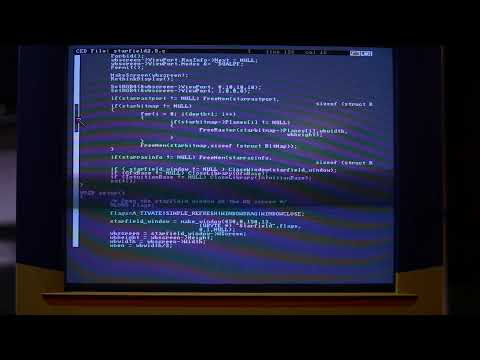
It is cited as evidence that text scrolling on late-80s hardware was smoother than in many modern editors.

HN regards it as a pivotal early talk in the DevOps movement and the original source for the idea.

The go-to reference for ChatOps, recommended for the idea of chat as a shared command line where teammates learn by watching.

HN recommends it as the best overview of Cursorless, likened to vim with your voice, and relevant to accessibility and voice coding discussions.

It is the cited origin of the 'PDE' term, which HN uses when discussing vim, Neovim and Emacs as personally customized environments.

Shared in outage and accidental-deletion threads as a relatable, well-told horror story.

HN points to it to show what the Lisp REPL workflow is like and as a good tour of SLIME.

Recommended as the canonical introduction to tree-sitter and why fast incremental parsing enables live editor support.

HN commenters point to it as a live demonstration of interactive Lisp development, including compiling single functions in a running program and debugger-driven workflows.

HN commenters point to it as the best first-hand account of Cursor's technical internals, straight from its founders.

Recommended as a useful early tutorial for learning fzf with Vim.

Recommended as the author's own explanation of xonsh's design and how Python and shell interplay.

HN commenters point to it as a short, charming first-hand account of Unix history from someone who was there.

Recommended in TDD and unit-testing threads as a balanced debate among three prominent developers that avoids dogma.

Referenced in discussions of early GUIs and Alto history as a rare first-hand demonstration by the creator.

Referenced as a rare public description of how Google builds software, from which tools like Bazel descend.

Cited as an early example of live coding applied beyond debugging, and as precursor to Light Table.

HN cites it in Python testing and code quality threads, including his point that 100% coverage proves little.

Cited as a leading example of structural editing whenever threads discuss alternatives to text-based code editors.

HN points to it as a fun, substantive exchange between two experienced practitioners on TDD's value.

Cited in discussions of why Clang exists and its case against GCC.

HN cites it as the clearest pitch for programmable, malleable development environments, especially in threads on Smalltalk, Emacs and user-programmable systems.

HN cites it as a first-hand account of Microsoft's QA cuts and reliance on automated tests in threads about buggy Windows updates.

HN mentions it as an example of voice-driven editing, and one commenter says it clarified how Vim commands compose.
Which of these have you already seen?
Connect YouTube and HackerTube AI hides what you've watched and ranks the rest for you.