
HN repeatedly calls it one of the best math and graphics explainers on YouTube, praised for bridging game dev and math.
Topics › Design, Graphics & Visual Media
The best computer graphics & rendering videos, according to Hacker News
112 videos about computer graphics & rendering that Hacker News commenters keep pointing each other to, ranked by how many separate months they were recommended. Part of Design, Graphics & Visual Media.

It is the go-to recommendation for anyone who wants to genuinely understand Bezier curves and splines, and commenters repeatedly call it one of the best programming-related educational videos.

Held up as the landmark demoscene production and a counterpoint to software bloat.

HN repeatedly calls it a mind-blowing and accessible introduction to SDFs and procedural art from a master explainer.

HN treats it as the definitive, funny and educational answer to why X could not be fixed, and links it in almost every Wayland vs X argument.

HN treats it as the definitive deep dive on Nanite, admired for the engineering ambition behind pixel-sized triangles and compute-driven rendering.

HN commenters repeatedly point people to it as the most accessible, developer-friendly introduction to geometric algebra and its use in graphics and physics.

HN commenters point to it as the best demonstration of procedural graphics from a master, accessible to beginners yet deep enough for advanced viewers.

HN repeatedly holds it up as the benchmark for what procedural generation and size-coding can achieve in 4K.

A favorite on Ask HN lists of programming YouTube channels, praised for mind-blowing systems and graphics programming and a watchable coding style.

HN recommends it as a beautiful example of what simple rules and compute shaders can produce, and many commenters were inspired by it.

HN calls it an inspirational must-see on SDF rendering and a favorite tech talk for graphics programmers.

HN returns to it as a striking demonstration that core GUI, CAD and constraint-programming ideas existed in the 1960s.

HN considers it a fantastic, mind-blowing talk that shows how a single skilled artist can build detailed VFX scenes quickly.

The go-to talk whenever Wave Function Collapse, Townscaper or tile-based procedural generation comes up.

HN treats it as one of the best intros to the math of 3D graphics and a staple answer to how to learn graphics programming.

HN cites it as the accessible go-to explanation of gamma and color blending errors in image programs.
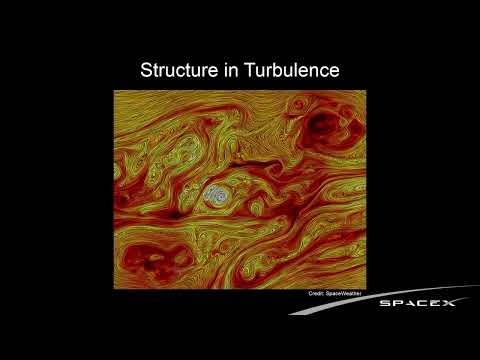
HN points to it as evidence of SpaceX's serious simulation capability and as a showcase of GPU compute for CFD.

HN uses it as the go-to answer to claims that Wayland is unnecessary, from a developer who knew X's codebase well.

HN commenters use it as the standard example of how much a tiny program can do, in contrast to bloated modern software.

HN recommends it as a free, serious introduction to digital and computational photography from a professor who helped build the early Pixel cameras.

HN points to it as the standard example of procedural content generation and extreme size optimization in games.

Commenters repeatedly point to it as an astonishing, beautiful piece of obfuscated-C code golf.

HN points to it as a standout example of physics-based sound synthesis and engine simulation.

HN cites it as a startling example of how advanced Lisp machine interactive graphics were, often in Lisp and REPL-driven development discussions.

Cited whenever threads discuss recovering hidden images or non-line-of-sight imaging, as a clear demonstration of light transport.

Recommended whenever Atari vector games come up as an excellent, deep technical explanation of how they worked.

Recommended as the clearest explanation of Halide's ideas and of scheduling for performance.

HN points to it as proof that a small, straightforward renderer can beat Windows Terminal on speed and memory, whenever software slowness comes up.

HN recommends it as the original explainer for a clever dithering technique and the go-to video in dithering threads.

HN recommends it as an excellent beginner series that fills FreeCAD's gap in learning material.

HN people share it as a striking demonstration of how much graphics a modern terminal can do.

Called a rite of passage for new Blender users and the standard first recommendation for learning the program.

HN recommends it as the demoscene showpiece to show someone what extreme size-limited real-time graphics look like.

Commenters recommend it as the clearest way to understand WFC, especially in threads about Townscaper and tiled content generation.

HN points people to it as the canonical demo of early interactive graphics, constraints and objects, and as one of Alan Kay's favorite things to show.

Recommended as a prime example of large-scale procedural generation used in a shipped AAA game.

HN commenters cite it as the landmark demo of the demoscene's golden era, and this capture lets people watch it without running it under DOS.

Recommended as an excellent talk from a demoscene practitioner on how to build sophisticated scenes from distance functions.

Recommended as the most beginner-friendly way into shader programming and procedural graphics.

HN cites it as a showcase of one of the best voxel engines, impressive for its detail and smoothness.

Pointed to when non-Euclidean geometry or games in hyperbolic space come up, along with the creator's well-liked devlog.

HN uses it as a quick, non-expert primer whenever Gaussian splatting comes up.

HN points to specific segments, especially Sutherland's SFQ talk and graphics pioneers, rather than the full seven hours.

HN fans praise Bisqwit as a favorite programming YouTuber and this video as an excellent look at dithering.

HN recommends it as a good overview of what ray-traced lighting changes for developers and players.

HN points people to it as a rare, concrete look at how a AAA studio uses procedural tools to fill huge worlds with natural-looking environments.

HN recommends it as an accessible introduction to Gaussian splats, made by people who understand the subject.

Recommended as an approachable intro to path tracing in ray tracing and rendering threads.

Recommended as a good first-steps shader tutorial that also teaches broad graphics knowledge.

Recommended among the nice visual explorations and tech demos of non-Euclidean geometry for games.

HN commenters point to it as a patient, full-length walkthrough of how a raymarched shader is built from scratch.

HN recalls it as a mind-blowing pre-AI demo of 2D-to-3D object extraction.

Remembered fondly as a tiny, efficient demo that inspired graphics programmers and is a benchmark for modern terrain rendering.

HN commenters recommend it as an amazing overview of the technical feats and history behind Elite, and cite it for what the 6502 could do.

HN commenters recommend it for the live-coded demos running at high frame rates, calling the performance impressive.

HN recommends it as a striking example of rendering with distance-estimated fractals and non-standard graphics approaches.

Used as a go-to example of neural networks enhancing game rendering, referenced in later AI-graphics discussions.

Pointed to as an impressive technical N64 homebrew demo showing unexpectedly high-res textures.

Cited as an impressive real-time rendering showcase, with Nanite and a huge photorealistic city, that rivals film CGI.

Shared as a stunning shader demo, with praise for its clear explanations of how it works.

Cited in CAD threads as a rare plain-spoken comparison of commercial geometry kernels and their limitations.

Cited as an accessible explanation of AI denoising, which underpins real-time ray tracing on RTX hardware.

HN commenters call it a great beginner-friendly introduction and enjoy watching Quilez work through graphics.

Whenever Wayland versus X comes up, HN points to this talk as the authoritative explanation from an X maintainer of why X was replaced.

Recommended in shader and rain-simulation threads as an engaging tutorial from a well-liked graphics-programming channel.

People link it as the quick answer to how Google builds 3D maps, and as evidence that planes are still used to capture the imagery.

HN recommends it for first-hand accounts of how early 3D games like Doom worked within tight hardware limits.

HN points to it as the definitive example of making 3D rendering look like 2D animation through cel shading, outlines, and framerate tricks.

Pointed to in Minetest and spherical-voxel-world threads as a striking example of what the open-source engine can do.

Recommended as a great visual explanation of the infall experience, including when spaghettification happens.

HN points to it as a concrete demonstration of object-oriented versus cache-friendly design and the performance effects of branch misprediction.

HN people recommend it as the best overview of how 3D on the GBA progressed over the console's life, usually in threads about GBA ports and homebrew 3D engines.

HN points to it as proof that the Physically Based Rendering book won an Oscar and for the speech crediting Knuth's literate programming.
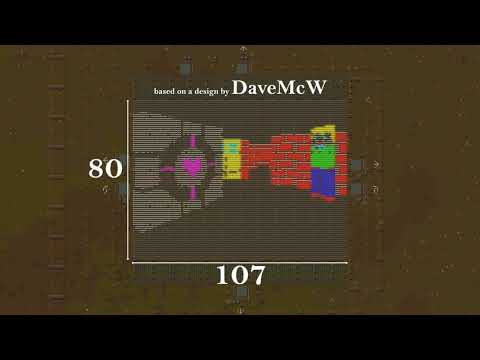
HN points to it as a showpiece of what Factorio's circuit network can compute, alongside other absurd in-game computing feats.

HN commenters point to it when discussing how WebRender works and as evidence of what GPU-based browser rendering can achieve.

HN cites it as the example of real-time GPU path tracing, noting its noise problem.

HN uses it as a reference for how noisy raw real-time ray tracing is and how it compares with traditional faked lighting.

HN cites it as an example of computational mechanism design, especially in threads on gears, linkages and animatronics.

HN points to it as a detailed production example of mesh shaders and GPU-driven rendering, though some find it daunting.

HN commenters cite it as the most impressive 256-byte production and as an example of how much graphics code can fit in a tiny binary.

Linked in ant-simulation threads as a compact, open-source example of emergent behavior.
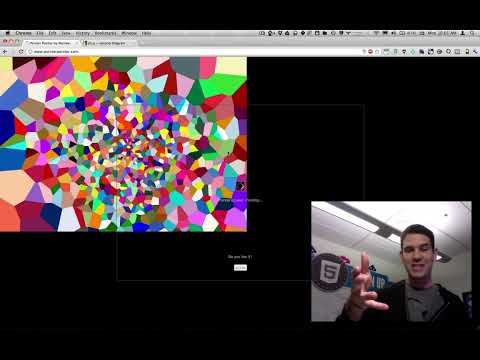
HN links it as the author's own breakdown of Pointer Pointer's inner workings.

HN people cite it for solo-dev inspiration and for the rendering technique behind the game's look.

Cited as an early proof that real-time path tracing was feasible, years before it reached mainstream games.

Linked for the Microsoft talks on WSL GUI support and how WDDM drivers map into the Linux VM.

Pointed to as a nice overview of implementing ASCII rendering as a post-processing shader.

HN people bring it up whenever music-playing machines or robot bands come up, as the classic CG precursor.

It is cited as an early example of neural networks learning physics, and recalled during later discussions of AI video generation.

Cited as a talk full of rendering tricks, and as an example of what a small team can do with custom tech.

Shared as an example of simple rules yielding complex emergent, life-like behavior, alongside Game of Life and particle simulators.

HN cites it as an earlier, smoother precedent whenever new learned-locomotion or simulated-walking work appears.

HN cites it as the example showing why CRT emulation is needed to render effects the original artists intended.

HN cites it in Magic Leap and VR threads as a clear overview of how light fields could solve focus and bulk problems.

Used as the accessible explanation of PS1 rendering quirks whenever retro 3D graphics or PS1-style renderers come up.

HN shares it as a classic glimpse of early SGI hardware graphics in retro-computing and IRIX threads.

Linked as the demo behind femtosecond plasma displays, often noting the touch burns skin and the system is loud.

HN people cite it as the origin of the vanishing-in-a-screenshot effect, used in ideas for captchas and AI-resistant text.

Shown as a historic example of fractal terrain rendering in games, in threads about voxel and terrain rendering.

Cited as the canonical demonstration of pulling out invisible signals like pulse from video, with commenters imagining other applications.

HN brings it up as a classic example of evolutionary algorithms, including how the creatures exploited physics-simulation bugs, which parallels metric gaming in AI.

Cited in discussions of voxel rendering, id Software's research and Euclideon-style claims as an early demonstration of the technique.

Cited as an example of simulating the full optical chain of a camera in physically based rendering.

Cited as an existing example of 3D or spatial desktop shells and what Wayland compositing makes possible.

Cited as an impressive example of real-time digital humans, especially the facial and mouth animation.

Referenced as the exciting demo that set expectations for Servo and WebRender speedups, later compared with Firefox's real results.

Mentioned as an early example of real-time ray tracing and path tracing demos.

Used as a visual example of how foveated rendering can cut the GPU power needed for VR.

HN uses it as a reference point in deepfake and fake-news discussions, showing that convincing real-time video manipulation was already possible in 2016.

HN cites it as a marker of where real-time graphics are heading, such as sub-pixel triangles and per-pixel compute.

Used as a quick visual benchmark of the performance gain WebRender brings in Firefox and Servo discussions.

HN cites it as an early demo of generating 3D models just by filming an object, in threads on Kinect, 3D printing and depth cameras.
Which of these have you already seen?
Connect YouTube and HackerTube AI hides what you've watched and ranks the rest for you.