
Held up as the landmark demoscene production and a counterpoint to software bloat.
Topics › Computing History & Culture
The best demoscene & retrocomputing videos, according to Hacker News
135 videos about demoscene & retrocomputing that Hacker News commenters keep pointing each other to, ranked by how many separate months they were recommended. Part of Computing History & Culture.

HN treats it as the standard starting point for Game Boy emulator writers and homebrew developers, with several calling it one of their favorite talks.

It is HN's favorite example of extreme code compression, a compelling song and visuals from a program smaller than a tweet.

A perennial favorite, recommended as proof that expressive modern C++ can compile to efficient code even on tiny retro hardware.

HN fans call it a favorite engineering video and a showcase of Tom7's masterpiece-level, playful hacking.

It is the go-to chronological, in-depth overview of tracker music, recommended whenever trackers, the Amiga or the demoscene come up.

HN commenters point to it as the best demonstration of procedural graphics from a master, accessible to beginners yet deep enough for advanced viewers.

HN repeatedly holds it up as the benchmark for what procedural generation and size-coding can achieve in 4K.

HN people recommend the whole AGC restoration series as a deeply nerdy look at real Apollo-era hardware, including core rope memory.

HN points to it whenever discussion turns to how old games were so small, as a clear tour of 8-bit optimization and creative work under hardware limits.

Recommended whenever the demoscene comes up as a well-made, accessible history and tour of the art form.

HN recommends it for showing how old developers exploited the smeary nature of composite signals and what CGA really looked like on period hardware.

Recommended as an approachable start to Amiga demo and 68000 assembly programming.

HN commenters love it as a vivid demonstration of terminal history, explaining why tools like ed and the tty echo model work the way they do.

HN holds it up as a showcase of what a stock Amiga 500 can do and as one of the best demos ever in technique and storytelling.

HN programmers admire it as a clean, clever demonstration of emulator design and as the standout of a favorite programming YouTuber.

Recommended as a well-researched piece of computing history on Amiga FPS games and Doom's impact.

HN commenters use it as the standard example of how much a tiny program can do, in contrast to bloated modern software.

Repeatedly called essential viewing for game development history and clever work under memory constraints.

HN people hold it up as a standout modern demo, praising its scene transitions and how it looks on 3D displays.

HN points to it as the standard example of procedural content generation and extreme size optimization in games.

Recommended as a fascinating look at fitting a modern game into NES constraints.

HN people share it as a mind-blowing example of demoscene craft and the reigning champion of 256-byte demos.

HN plugs it as a favorite example of what skilled demoscene coders can pull out of 30-year-old hardware.

HN calls it the video that started the one-line-code music trend and recommends exploring the demoscene author's channel.

Praised as a standout, non-standard Strange Loop talk explaining the reasoning behind Uxn and resilient computing.

Recommended as an entry point to a favorite electronics channel, valued for deep knowledge and no showy bravado.

HN recommends it as the demoscene showpiece to show someone what extreme size-limited real-time graphics look like.

Recommended as the detailed, entertaining history of why 3D Pinball vanished from Windows.

HN points to it for the design philosophy behind PICO-8's constraints.

HN people recommend it as the work of an unusually creative artist-engineer whose whole channel is worth exploring.

Cited as the prime example of what clever programming can do with a 1-bit audio output.

HN people use it as a showcase of what fits in 64 kilobytes.

HN people treat it as the canonical C64 talk and rewatch Steil's 'Ultimate' series regularly.

HN recommends it as a great walkthrough of chip reverse engineering and the story of Visual 6502.

HN commenters cite it as the landmark demo of the demoscene's golden era, and this capture lets people watch it without running it under DOS.

Recommended as an excellent talk from a demoscene practitioner on how to build sophisticated scenes from distance functions.

HN points to it as the standard example of what cycle-exact, hardware-level programming can achieve on ancient machines, from the colors it produces to its PC speaker audio.

Commenters hold it up as proof that 2600 programming is alive in the demoscene and as one of the most impressive demos ever made on the hardware.

HN commenters point to it as an impressive showpiece of the demoscene and a nostalgic career retrospective of a legendary group.
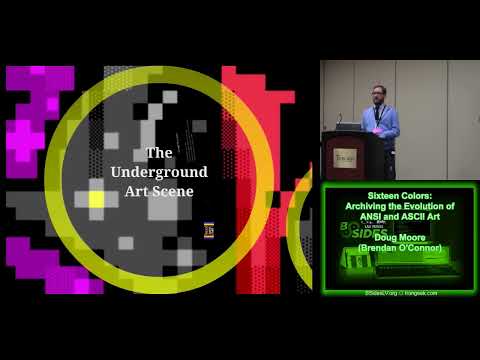
Commenters recommend it as the best introduction to the history of the ANSI and ASCII art scene.

HN fans praise Bisqwit as a favorite programming YouTuber and this video as an excellent look at dithering.

Recommended as a clear, approachable explanation of how retro graphics hardware actually worked.

HN recommends it as an excellent history of the famous ABIT BP6 board.

Recommended in threads on chip emulation as a look at how hard it is to emulate vintage sound hardware accurately.

Recommended in DX7 reverse-engineering threads as a look at the effort behind bit-accurate emulation.

HN recommends it as a showcase of what the demoscene can do, with high-res antialiased vector graphics and motion blur.

Cited as a showcase of what fits in 4k, in discussions of code size limits and the demoscene.

HN admires it as a creative hack and cites it as the inspiration for later tiny-game and QR-code projects.

HN points to it as one of the best and most formative early PC demos, a touchstone of demoscene history.

HN brings it up in threads on warez, cracktros and the demoscene as a funny, informative history of the piracy scene.

Remembered fondly as a tiny, efficient demo that inspired graphics programmers and is a benchmark for modern terrain rendering.

HN commenters recommend it as the deepest explanation of how AGC rope memory works and how it differs from core memory.

HN commenters recommend it as an amazing overview of the technical feats and history behind Elite, and cite it for what the 6502 could do.

HN points to it as a clear, lawyer-made summary during Nintendo emulator disputes like Yuzu.

HN commenters link it as a fond example of elaborate hidden Easter eggs in old Microsoft Office.

Recommended as a clear overview of Another World's graphics and programming and what the Amiga could do.

HN points to it as a vivid showcase of how much a modern-feeling GUI OS can do on slow 8-bit hardware.

HN recommends it as a showcase of what skilled demoscene programmers can squeeze out of extremely limited hardware.

Recommended as a decent introduction to the Vampire accelerator and a cheaper way to modernize classic Amigas.
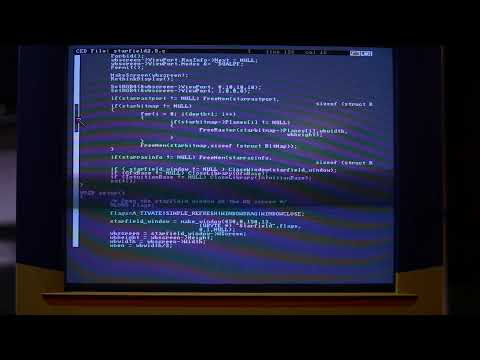
It is cited as evidence that text scrolling on late-80s hardware was smoother than in many modern editors.

HN people share it as rare behind-the-scenes footage of the making of a legendary demoscene production.

HN points to it as a fun, well-known example of line-printer art on early IBM hardware, and to the channel for vintage computing history.

HN commenters recall it as a mind-blowing early 3D game that showed what the Archimedes hardware could do.

HN links it for Jack Tramiel's pricing philosophy and a memorable Tramiel and Wozniak exchange on low versus sustainable pricing.

Shared as an impressive example of squeezing video and compression onto a 1 MHz 8-bit machine in Bad Apple porting threads.

Cited in anti-piracy discussions as a clear explanation of clever retro copy-protection tricks, though one commenter disputes a claim about Leander.

Recommended in threads about SGI and vintage workstations as a good look at the hardware.

HN treats it as a showcase of what clever tricks can squeeze out of 1981 hardware, and the sequel to 8088 MPH.

HN commenters point to it whenever Chuck E. Cheese animatronics come up, as the best history of the band's direct ancestor and its devoted preservationists.

HN commenters recommend it as a clear demonstration of Amiga-era sampling and tracker workflows.

HN links it mostly for the glimpse of Cook's studio and his decades-old Atari ST, and as an example of a sample-based track.

Cited as a great demo of how early microcomputers were actually booted and operated.

Cited as the go-to demonstration of how hard and clever Atari 2600 graphics programming was.

Cited as a deep, entertaining look at firmware-level software and vendors abusing pre-boot access.

HN cites it as evidence of Microsoft's backward compatibility and of upgrade engineering done well.

Held up as the peak of demoscene hardware hacking, especially for its finale and for how good the PC speaker sound gets.

It is the canonical example HN brings up in threads about music hacks on floppy drives, printers and other junk hardware.

Recommended as a wonderful, thorough telling of the Amiga story in threads about the machine.

Shared as a favorite example of retrocomputing hackery, a demo that runs entirely on a disk drive.

HN people recall it with nostalgia as an impressive feat for its era, used as an example of the Amiga's graphics ability.

HN shares it as a fun explanation of analog floppy-disk cameras.

HN people recommend it as the best overview of how 3D on the GBA progressed over the console's life, usually in threads about GBA ports and homebrew 3D engines.

HN uses it as the canonical example of what the demoscene could squeeze out of an Amiga 500 and a single floppy disk.

Shared as a nostalgic tour of SGI hardware for people who remember that era.

It is cited as a review of a new boot-to-BASIC computer, and one commenter suggests it for a kid starting to program.

Cited as the evidence for the quirky claim that an accelerated Amiga is the fastest classic Mac.

HN uses it to show a classic early Mac game, noting its low-latency input and early audio showcase.

HN mentions it as a good high-level tutorial when threads on tracker music and the Amiga scene come up.

HN commenters cite it as the most impressive 256-byte production and as an example of how much graphics code can fit in a tiny binary.

Shared as an example of great Amiga demoscene work.

Cited as an example of a compact, ready-made way to play retro DOS games on real hardware without collecting old machines.

Mostly mentioned as a joke or a personal pick, including on a coding playlist thread.

HN cites it as an early example of making a computer emit music over AM radio through electromagnetic side effects.

HN points to it as the original proposal that explains the vision behind the Commander X16.

HN commenters use it to show how responsive BeOS was on very modest hardware compared with Windows and Mac of the era.

HN commenters recommend the series as an approachable demonstration of the simple standardized interface used by character LCDs.

HN uses it as a quick look at what using a Canon Cat was actually like, in threads on Raskin, command interfaces and early Macintosh history.

Cited as nostalgic period documentation of the early UK microcomputer era, with commenters fondly remembering the series and the BBC Micro.

Brought up in Amiga threads as a classic example of what the demoscene achieved on old hardware.

HN fondly recalls it as the ideal visual demonstration of sorting algorithms and as the thing that got some people into programming.

HN cites it as a mind-blowing example of 1990s demoscene technique on Amiga hardware.

Cited as an example of using modern C++ on 8-bit hardware.

Shared as a recent, detailed comparison of the two early GUIs and where their conventions differ.

HN cites it as the example showing why CRT emulation is needed to render effects the original artists intended.

Linked in threads about algorithmic and demoscene music as the canonical introduction to bytebeat.

Cited as a classic of Amiga music, and commenters use it as a reference or comparison track.

HN shares it for nostalgia about the tinny PC speaker sound of early adventure games.

Linked when retro hardware, 8088 or 386 machines, or oddball AliExpress computers come up.

HN cites it as the example proving Windows has an unbroken upgrade path from 1.0 to 8.

HN uses it as a light reference for how old software looks to a new generation, often as a half-joke.

HN shares it as a classic glimpse of early SGI hardware graphics in retro-computing and IRIX threads.

HN cites it as proof that e-ink screens can be pushed to surprisingly high refresh rates, supporting arguments about interactive e-ink uses.

HN cites it as the classic early example of a computer producing music through electromagnetic emissions, in threads on System Bus Radio and similar hacks.

Shown as a historic example of fractal terrain rendering in games, in threads about voxel and terrain rendering.

HN links it as the original video whenever someone renders Bad Apple on unusual hardware or displays.

Cited as a landmark demoscene piece that astonished people with what a PC could do.

Cited as a nostalgic example of a CLI that orders pizza whenever HN discusses terminal-based ordering.

Mentioned as a quirky example of demoscene creativity and related overhead-projector techniques.

Cited in discussions of intuitive design and how younger people relate to old technology.
Which of these have you already seen?
Connect YouTube and HackerTube AI hides what you've watched and ranks the rest for you.