
HN repeatedly calls it the clearest introduction to waves and transmission-line behavior, better than modern explainers.
Topics › Hardware & Electronics
The best electronics & circuit design videos, according to Hacker News
106 videos about electronics & circuit design that Hacker News commenters keep pointing each other to, ranked by how many separate months they were recommended. Part of Hardware & Electronics.

HN repeatedly recommends the series it launched as the best way to understand how a CPU works, praised for Eater's clear teaching.

HN repeatedly recommends it as the best hands-on way to understand how a CPU and a computer work from first principles.

Recommended for years as the best technical introduction to memristors from the person who found the physical device.

Hailed as the best video on electrical engineering and an essential, eye-opening watch for anyone designing high-speed boards.

HN considers it the best experimental rebuttal and clarification of the Veritasium wire debate, with real measurements.

HN engineers cite Hartley as the intuitive, field-based alternative to cargo-cult PCB advice, especially on differential pair routing, reference planes and EMI.

HN recommends it as a clear, from-scratch look at how video hardware works, understandable with just basic logic knowledge.

HN commenters call it mesmerizing and a great look at how things are actually made by a dedicated craftsman.

HN commenters recommend it as a clear, comprehensive explanation of USB signaling and keyboard polling.
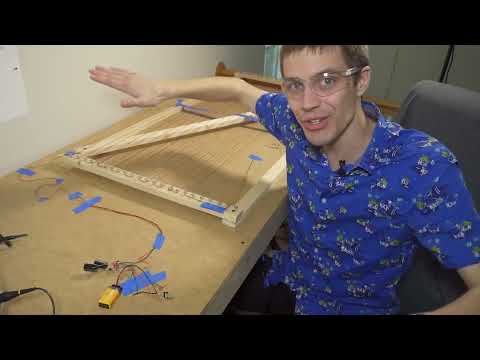
Praised as the clearest visual explanation of transmission lines, impedance and signal propagation, with several commenters saying it made it all click.

HN people point to it as the sober, technically grounded picture of hardware supply chain security, and an eye-opening one.

HN points people to it as a deep dive showing how complex logic was built without computers.

Linked whenever people ask why a Thunderbolt cable costs so much; the CT scans show the construction difference clearly.

HN calls it one of the best explanations of how atomic clocks actually work.

HN points to it as proof that efficient, long-lived LED bulbs can be built and as an example of well-designed lamps.

HN recommends it as the clearest introduction to what is inside an AC EV charging station and why it is much simpler than people assume.

HN treats it as the obligatory video to share whenever plugs and sockets come up, praised for its safety reasoning.

HN commenters prefer it over other transistor explanations as an enlightening starting point that leads into building logic gates and a CPU.

Recommended as the best look inside a modern PCB fab, cited in threads on hobby PCB vendors, manufacturing in China and automation.

Linked by the author and others in LibrePCB threads as the best explanation of its design rationale.

HN commenters use it as a vivid, math-backed demonstration of what ultracapacitors can do and why shorting them is dangerous.

HN links it in any LED Christmas light discussion as the explanation of why they look off and how to fix it.

Recommended as the key video for understanding control logic and microcode.

HN people use it as the accessible go-to explainer for the superhet trick whenever radios or signal processing come up.

HN cites it for the field-based picture of power transfer, noting it was controversial at release but the experiment largely backed the creator.

HN finds it mesmerizing and uses it to build intuition for waveforms and oscilloscope XY drawing.
Recommended as an enlightening and funny explanation of bridge rectifiers, often linked in power supply teardown threads.

Recommended as the definitive visual walkthrough of the WLW 500 kW transmitter, with detailed equipment views and lots of history.

HN recommends it as a thorough, general walkthrough of the steps in designing your own keyboard.

Recommended in threads on chip emulation as a look at how hard it is to emulate vintage sound hardware accurately.

Cited as the go-to demo that full microcontrollers now cost about three cents, replacing things like the 555 timer.

HN recommends it as a practical way to learn KiCad and PCB design by following one full project.

Recommended as a good introduction to SMD soldering techniques for beginners.

HN commenters credit it for inspiring their own satellite-reception hobby and praise the channel's high-quality content.

Recommended as a friendly starting point for people who want to learn PCB design with free tools.

HN likes Ellsworth as a hardware tinkerer, and cites the video as proof that transistors can be made with low-tech, DIY fabrication.

Cited in threads about cheap chargers as proof of why proper certified and isolated power supplies are worth paying for.

Recommended as part of a channel with deep teardowns of extreme test equipment, valuable for anyone interested in electronics or RF.

Recommended as an eye-opening look at pre-computer automation and relay logic.

Recommended as a deep, hands-on explanation of how a 555 timer works inside.

HN people recommend it as a fantastic maker project among Apollo anniversary builds.

HN commenters recommend it as an especially good explanation of analog TV and CRT shadow masks.

HN people recommend Ben Eater's videos for easy, clear explanations of digital logic and building computers.

Commenters recommend the series for hearing an operations supervisor explain how Voyager signals are actually received.

Shared in Voyager news threads as an accessible look at the real equipment used to talk to the probes.

HN points to it as proof that SMD soldering is simpler than people fear.

Suggested as a gentle starting point for beginners in electronics.
HN cites it as the key example of Amazon selling dangerous counterfeit goods and warns people to test their fuses.

Recommended in Voyager threads as the best look at how operators actually contact the probe.

HN recommends the series as awesome and notes it is now legally on YouTube; commenters cite it for radio history.

HN commenters recommend it as a practical explanation of microwave hazards and shielding, and of using microwave ovens safely without an enclosure.

Brought up in Tesla auto-wiper threads as the clear explanation of how simple conventional rain sensors work.

Recommended as a clear account of the craft of reading chips from photographs.

Recommended as a practical way to get 12V or other voltages from USB-C for hobby projects.

Recommended as a great creative PCB-design video and linked in threads on KiCad and artistic boards.

Recommended as the answer to why breadboard computers are worth building and why breadboards work at these speeds.

Recommended as a clear introduction to LoRa and the link budget idea that sets it apart.

HN users suggest it to anyone who enjoys extreme high-voltage projects and big capacitor-bank discharges.

Recommended for its detailed and clear look at Starlink hardware and beamforming.

HN points to it in battery-fire threads as a rare look at what is inside a Li-ion cell and how dangerous disassembly really is.

Cited as a teardown of a well-made, safe USB charger, and as evidence for why quality chargers matter.

Recommended as an accessible, educational build that anyone with basic logic knowledge can follow.

HN commenters link it as the easy way to see the giant home-built CPU without hammering the author's website.

HN calls it a famous, hilarious teardown and a go-to example of terrible hardware quality.

Referenced as a typical example of the channel's hacker-eye view of everyday technology, and for its flasher explanation.

HN people point to it as a showcase of CERN's open hardware and as an example of quality metrology content.

HN links it as an entertaining, in-depth rebuttal to 5G health fears from an electrical engineer.

HN commenters recommend it as the more rigorous, polite and complete treatment of the Veritasium puzzle, though one dissents that the original misleads people.

HN mostly cites it as an example of the absurdly powerful lasers sold cheaply online, and a nod to the channel's DIY laser builds.

Referenced for years as the go-to example of fine gesture input, often in discussions of keyboard replacements and later its appearance in the Pixel 4.

HN points to BigClive as a source for how cheap UVC lamps actually work and what they emit.

HN commenters point to it as the clearest explanation of the PS/2 protocol, usually when keyboard interfaces come up.

HN recommends it as an in-depth look at mechanical logic, and uses it as an analogy for state machines and biological instruction processing.

HN points to it as the authoritative explanation of why fractal wood burning with MOTs is deadly and how to reduce the risk.

Pointed to as a clear look at what is inside a smart meter, including anti-tamper switches and the cellular module.

HN points to it as a cool demonstration of cheap precision laser measurement and the origin of hacks based on self-mixing.

HN suggests it as a vivid, hands-on way to understand circuits, including for a blind child learning to program.

Cited as an example of how much surprising behavior can hide in seemingly simple circuits, in hardware backdoor discussions.

HN cites it as the example of oscilloscope music, where the song itself is the visual, in XY mode.

HN commenters cite it as a teardown from a YouTuber who dissects appliances, showing live wires in contact with water.

HN cites it as a striking example of radio hacking with commodity chips.

Cited in caliper threads as a teardown showing how cheap digital calipers work and that they are better than expected.

Recommended as the deep, expert RF analysis behind Starlink's hardware.

HN commenters recommend the series as an approachable demonstration of the simple standardized interface used by character LCDs.

Pointed to as a companion to the Art of Electronics book, for people curious about the authors.

Cited as a rigorous radio-engineering analysis of what radar capability Starlink could plausibly have.

HN points to it as a clear explainer of how analog TV and CRTs actually work, and as the entry point to the author's wider TV series.

HN cites it as the go-to debunking whenever solar roads come up, because it does the math.

HN cites it as empirical evidence that PCIe cables can be chained to roughly three meters before failing.

Recommended as the companion explanation to the Espargos project, showing how phase and time differences localize devices.

Pointed to as proof that you can weigh micrograms cheaply at home, and as a clear breakdown of how such a scale works.

HN recommends it as a clear explanation of how lifters and ion wind propulsion work, mostly in threads about exotic propulsion and flying saucers.

HN points to it as an engineer's evidence of why cheap counterfeit chargers are dangerous.

Cited as the definitive engineering takedown of uBeam and as a cautionary example of hype-driven startups.

HN cites it whenever someone asks whether USB-C holds up better than micro USB, as a small sample but concrete test.

HN uses it as an example of Google's search answers confidently giving the wrong date for the invention.

HN commenters bring it out whenever AM radio, strong transmitters or accidental demodulation comes up, as the classic example of grass playing radio.

Linked as the original demonstration whenever battery-free or energy-harvesting wireless communication comes up.

HN cites it as an example of early research into room-scale wireless power transfer.

Linked whenever someone reports a monitor blacking out from static electricity, as prior art on the same problem.

Shared as a curiosity showing that with enough power almost anything can demodulate AM radio.

Repeatedly linked under hype stories about nuclear diamond batteries as the definitive debunk.

HN commenters link it as a sound sample when discussing data-over-audio projects that resemble RTTY.

Cited in battery and electrical safety threads as a vivid demonstration of what very high-current battery banks can do.

HN links it as a hands-on demonstration that oscillator frequency depends on orientation relative to gravity.
Which of these have you already seen?
Connect YouTube and HackerTube AI hides what you've watched and ranks the rest for you.