
HN considers it a classic, hilarious and sobering talk on ML inscrutability and tech hubris, often rewatched.
Topics › Arts, Comedy, Music & Film
The best satire & parody videos, according to Hacker News
362 videos about satire & parody that Hacker News commenters keep pointing each other to, ranked by how many separate months they were recommended. Part of Arts, Comedy, Music & Film.

Recommended as the standard companion to any Adam Curtis film, since it lampoons the style and gives reasons to take his claims with skepticism.

HN fans hold it up as a favorite among his videos and an example of gloriously bonkers technical art, and cite it in floating-point discussions.

HN loves it as a funny, shorter sequel and even uses it to introduce Erlang in university classes.

HN repeatedly names it as one of the funniest and best talks, a favorite example of absurd computation.

Beloved as a humor masterpiece and often cited as required viewing on what not to do in an academic talk.

HN recommends it as a funny deconstruction of TED talk style, and as a favorite example of the appearance of meaning without content.

HN commenters call it a must-watch for its deadpan, absurdly elaborate engineering and cite it for ideas like diluting strong engines with random moves.

Go-to reference in lottery threads for the point that earmarked lottery revenue does not really add to school funding.

HN recommends it as an entertaining four-minute introduction to evo-devo that works even for people who dislike the original song.

HN commenters recommend it as funny anti-motivational comedy that also touches on real truths about productivity and the rat race.

HN uses it as shorthand for vague, detail-free visionary pitches and as a satirical jab at TED-style techno-utopian talks.

Tom7 is an HN favorite, and this video is praised as hilarious, educational silly ML that keeps getting better.

Offered as a quick, entertaining primer on Keynesian versus Austrian economics, especially for newcomers to Hayek.

HN commenters love it as a witty and insightful tour of design anti-patterns, applicable to DSLs, OOP and API design.

HN commenters call it one of the best and funniest Onion News Network videos and a sharp parody of teen girls.

HN invokes it as the best spoof of how news is formulaically produced, often when discussing media quality or automated news.

HN recommends it as an entertaining explanation of chroma keying, green screens and how cameras process color.

Used as the canonical reference for the jargon-parody trope, and as a joke whenever technobabble appears.

HN commenters bring it up whenever Microsoft product naming, branding or marketing is confusing, pointing to it as a long-running self-aware critique.

HN commenters recommend it as a surreal, perfectly observed parody of old educational films, and quote it in jokes.

HN commenters bring it up whenever a poll or survey result looks suspect, as the classic illustration of biased question framing.

Commenters share it as a funny, memorable example of evasive depositions and of obstruction over public records requests.

HN commenters bring it up in threads about the internet, attention economy and smartphones, mostly as a favorite, with a few dissenters.

Commenters call it a favorite Daily Show clip and link it as a ready answer to climate-skeptic arguments.

HN commenters recommend it as the Onion Talks parody most relevant to tech and startup culture.

HN recommends it as a hilarious talk by a beloved speaker, and also uses it to jab at JavaScript's quirks.

Shared after the 2016 election and later as a pithy account of why Trump won and why political division needs to be moved past.

HN shares it as a fun, cheerful introduction to Lisp culture that people say they rewatch.

HN likes it as a funny, entertaining presentation, frequently linked in threads on NP-hardness of games and NES automation.

Quoted often for its line on alternative medicine that works being called medicine, and recommended as a full-length listen.

HN commenters recommend it as a catchy, accurate piece of science edutainment, and admire its footnote practice.

HN brings it up whenever curriculum fads or Common Core complaints appear, as a funny precedent from the 1960s.

HN people recommend it as an entertaining example of great effort on a trivial problem, and cite the template in LaTeX-versus-Word discussions.

HN recommends it as a funny sketch that lays bare the crazy things people have gotten used to on Amazon.

HN commenters cite it as a sharp, accessible primer on the NCAA's amateurism model and athlete compensation, including for readers outside the US.

HN users post it as a meme or satirical comment in threads about AI regulation, age verification and online identity.

Praised as painfully accurate office satire, with the channel's sketches called genius.

HN cites it as the prime example of going absurdly deep on a tiny subject, and as a favorite among long YouTube videos.

HN cites it in discussions about how media should report mass shootings, as an expert-backed argument for not glorifying perpetrators.

HN quotes it constantly, mostly as a joke or reference, whenever rocketry, engineers' ethics or skill-versus-morality comes up.

Recommended as a classic, funny Photoshop tutorial series with a strong comedic personality.

HN readers point to it as an example of Tom7's ridiculous-but-brilliant programming projects, here tied to license parody and typesetting.

HN recommends it as a delightful sequel to the original ad, brought up in threads on trademarks and the original campaign.

HN posts it as a joke in productivity and focus threads, and some praise the channel as pitch-perfect satire of tech stereotypes.

Linked in nearly every F-35 or procurement thread as the classic illustration of feature creep and design by stakeholder committee, including in software.

Cited to illustrate false balance and the trouble with giving all sides equal weight.

HN commenters list it among favorite long-form, info-dense YouTube videos and as a representative piece of Wurtz's quirky creativity.

HN posts it, often jokingly, as a prescient and witty explanation of Britain's ambivalent stance toward Europe, especially around Brexit.

HN recommends it as an accessible explanation of how Intuit's lobbying and deceptive design undermine free tax filing.

Recommended as a funny, clear explanation of native advertising whenever sponsored content in media is discussed.

Posted whenever Lehrer comes up, as the best way to see him perform, and treated as a complete stand-up-style set.

HN posts it as a favorite comic summary of debt avoidance and spending discipline, and as a joke in buy-now-pay-later threads.

Recommended as a savage, ahead-of-its-time parody of startup and tech culture.

HN commenters point the uninitiated to it as a beloved parody series, often in threads that mention yacht rock.

Recommended as a funny parody that resembles agile as practiced at large companies.

Commenters recommend it as an entertaining, accessible explanation of how bad the law is, including for non-technical audiences.

Shared as developer humor, with commenters insisting any Dylan Beattie mention must come with this song.

Pointed to in debates over stadium subsidies as a persuasive case that cities should not pay for stadiums.

Cited in threads about taste and terrible music as a famously engineered 'worst song', mostly for its curiosity value.

Recommended as an entertaining talk showing that targeting software projects and introducing bugs is nothing new.

Used as a running joke or satirical shorthand whenever the Daily Mail is cited or criticized.

Brought up in every deepfake thread as a funny and technically convincing early example of synthetic media used for satire.

HN commenters cite it as a favorite Lehrer song and invoke it as a joke whenever elements or science-themed wordplay come up.

HN people share it as a funny and apt take whenever job postings or recruiters demand passion.

Posted as relevant satire in threads on wokeness and identity politics, with some saying it is barely an exaggeration.

Resurfaces in threads on startups, valuations and hype cycles as a funny, prescient bubble satire.

Shared in Excel threads as a funny parody that treats spreadsheets like an e-sport.

HN commenters cite it as the canonical joke about administrators multiplying regardless of the work, whenever threads turn to institutional or corporate bloat.

HN links it as a funny but fact-based critique of carbon capture in climate and energy threads.

Cited in threads about phone addiction and distraction as a classic, widely seen illustration of the problem.

HN commenters link it when discussions turn to dam failures, bridge collapses, or the unglamorous work of maintenance.

Shared in dog-breeding threads as a snappy summary of the genetic-diversity problem.

Occasionally recommended as an in-depth critical take on Shapiro, though mentions are sparse and partisan.

HN mostly cites it as a notorious piece of McAfee lore, usually jokingly, whenever John McAfee or antivirus uninstallation comes up.

HN mostly drops it as a joke in async, Node and concurrency threads, and some call it hysterically funny.

HN mentions it as an enjoyable science parody song, one of a set of A Capella Science videos.

Shared as a delightful example of a famous media hoax.

Shared as comic relief that hits close to home for people who work with infrastructure at scale.

It is recommended in threads on the F-35 and defense procurement as a funny, mostly factual look at how requirements balloon, with some warnings about its accuracy.

Pointed to as an informative rebuttal to the popular claim and as an explanation of the film's satirical effect on Westerns.

HN quotes it in discussions of engineers' moral responsibility and recommends it as a favorite of Lehrer's witty songs.

HN points to it as a funny but accurate send-up of banker thinking, noting that comedians grasped the crisis before Lehman collapsed.

HN uses it as shorthand for the argument that car dominance was manufactured by deliberate propaganda.

HN commenters point to it as satire that illuminates strange transhumanist and digital immortality culture.

Recommended as a funny but surprisingly accurate illustration of streaming fragmentation driving piracy.

Cited in encryption policy threads as a funny, accessible primer and for its fake Apple ad.

HN cites it as an entertaining, fact-based explainer of gerrymandering tactics, though one commenter criticizes it as inconsistent.

HN uses it as a joke whenever jargon-heavy or meaningless technical pitches appear, and praises it as a masterclass in technobabble.

HN brings it up as the sharpest satire of scientists who serve whoever pays them, and as a favorite Lehrer song.

Shared as a joke about JavaScript culture and tooling, usually without much explanation.

Shared as a funny programming joke poking at the endless proliferation of web frameworks.

Used as a joke or satire reference in moderation, free-speech and police threads.

It is used as a recurring joke whenever threads touch on the internet as a physical thing, and sometimes praised as a favorite sitcom.

Posted as the obligatory joke in any thread about speech recognition, and recommended in a thread on what makes people laugh.

Mostly used as a joke reference whenever forklifts, safety or dying on the job come up, with one commenter calling it a funny and bloody case for warehouse safety.

Commenters point to it when discussing the lax regulation of cruise ships and flags of convenience.

Used as a shorthand joke for Google-scale bureaucracy and the difficulty of simple tasks at large companies.

HN commenters recommend it as a well-made version of the story and quote it jokingly whenever discussions touch on biology versus machine intelligence.

HN mostly drops it jokingly in threads about grammar, apostrophes and language, and occasionally discusses the animated video's making.

HN uses it as a recurring punchline whenever a device removes keys or buttons in favor of touch or novelty controls.

Shared as obligatory humor in FFmpeg and video tooling threads, praised as a funny take on the open source user experience.

HN commenters point to it as a humorous but pointed look at gun control and at learning from other countries' policies.

HN uses it as a go-to critique of bland corporate music and as a punchline whenever a slick corporate video appears.

Mentioned in Nelson and Engelbart threads as a curiosity with amusing cameos by computing pioneers.

Pointed to in healthcare cost threads as an entertaining primer on how the US system inflates prices.

Mostly quoted or linked as a witty example of Lehrer's satire, often as a joke in unrelated threads.

Posted as a joke and a reference whenever threads discuss newspaper bias and media pandering to readers.

Mostly posted as a joke in threads about corporate-speak, buzzwords and meeting culture.

HN cites it as dystopian satire in threads on DRM, digital ownership, mind uploading and AI copyright, often noting it increasingly looks like reality.
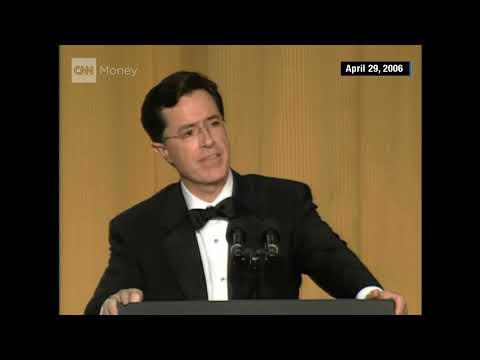
HN cites it as the source of the line that reality has a liberal bias and as a performance people still find phenomenal.

It is mostly cited as a joke or a wry reference in threads about dubious statistics.

HN cites it as a favorite example of a famous prank or trolling stunt that fooled a major broadcaster.

HN mentions it as an entertaining quick history, and as a stylistic reference or joke in threads about history and the creator's other videos.

Cited in passing to support the half-serious argument that Idiocracy's world is a utopia.

HN cites it as the classic satire of moral panics, especially when child-safety or illegal-image legislation is discussed.

Brought up as a beloved classic whenever forklifts or workplace safety come up in a thread.

Used as the go-to illustration of corporate-owned local newscasts reading identical scripts.

Cited as an example of the viral anti-establishment Covid videos shared in those circles, rather than as a recommendation.

HN cites it in threads about donated bodies and organ transplant failures as a critical look at opaque systems.
Which of these have you already seen?
Connect YouTube and HackerTube AI hides what you've watched and ranks the rest for you.