
HN treats it as a favorite example of silly but educational computer science, recommended often when threads touch odd storage hacks.
Topics › Systems, Networks & Security
The best networking & internet infrastructure videos, according to Hacker News
73 videos about networking & internet infrastructure that Hacker News commenters keep pointing each other to, ranked by how many separate months they were recommended. Part of Systems, Networks & Security.

The standard link when VPN marketing comes up, as a clear debunking of the scare tactics behind VPN ads.

HN commenters use it as the go-to funny, accessible explanation of net neutrality and credit it with driving public comments to the FCC.

HN treats it as the go-to short explanation of UTF-8, praised for making the topic stick.

HN treats it as the definitive practical talk on rollback networking in a shipped AAA fighting game.

HN commenters point to it as an inspiring talk behind content-addressed designs like IPFS, Urbit and immutable URLs.

Recommended as a clear explanation of Starlink's purpose and the case that it can beat fiber on latency for long routes.

Considered a favorite deep dive into how AWS does virtual networking at L3 and why VPC hosts cannot snoop each other.

HN points to it whenever someone underestimates how hard email parsing, validation or building a mail client really is.

HN points people to it as a funny and sobering warning about why parsing, validating, or implementing email software is far harder than it looks.

HN recommends it as an entertaining talk and the original source on the stripping attack that motivated HSTS.

HN points to Handley's simulations whenever Starlink latency comes up, as the best visualization of orbits and why laser links could beat fiber over long distances.

Recommended as the foundational talk on content-centric and named-data networking, and for its internet history stories.

HN recommends it whenever cloud egress costs come up, since it gives concrete numbers on real bandwidth costs versus cloud pricing.

HN cites it as the go-to overview of what SIM cards can run and do, usually in threads about Java Card, SIM attacks or phone security.

HN points to it when discussing exposed IoT and industrial devices, as an eye-opening look at how much is reachable online.

Recommended in broadband and net neutrality threads as an overview of the US telecom monopoly problem.

HN points to it whenever community or DIY fiber ISPs come up, as a first-hand account of how an individual built one.

Recommended as a rare look at the unmarked buildings and infrastructure where undersea cables come ashore.

Cited in Starlink latency debates as a clear visual analysis showing sub-100ms latency is plausible even without inter-satellite links.

Recommended as the thorough case for replacing TCP in datacenters and for Ousterhout's Homa protocol.

Recommended as a fun, practical talk on why bit flips matter for security, and cited in ECC memory discussions.

Cited as a must-watch persuasive case for HTTPS everywhere.

Recommended as a great documentary on FidoNet's rise, with interviews with figures like Tom Jennings.

Commenters call it an invaluable, approachable way to learn how optical networking actually works.

A few commenters recommend it as a skeptical take on Starlink economics, though others see it as dishonest.

HN points to it as the recorded talk behind the Netflix 800Gb/s slides and as a deep look at kernel-level optimizations for high throughput.

HN points to it as the foundational argument for sans-I/O protocol library design.

HN lists it among the best early resources for learning what IPFS is and does.

HN points people to it as a good plain-language explanation of net neutrality during the 2017 FCC fight.

It is the primary source for the original Starlink concept, so commenters cite it for Musk's stated goals on latency, hops, pricing and timelines.

Cited as real operator data that IPv6 is faster than IPv4 and that large networks are already going IPv6-only.

HN recommends it as an even-handed physicist's take for 5G skeptics, noting it is probably safe but under-studied.

HN points to it as an authoritative overview of AWS infrastructure, including what AZs and regions really mean.

HN cites it in ECC memory debates and bit-flip discussions as concrete evidence that memory errors have real security consequences.

HN threads link it as the primary source for Matrix's performance claims and sliding sync improvements.

Recommended as a clear introduction to LoRa and the link budget idea that sets it apart.

HN recommends it as a comprehensive walkthrough of the build-your-own-BitTorrent challenge and as an introduction to CodeCrafters.

Recommended for its detailed and clear look at Starlink hardware and beamforming.

HN links it as a vivid example of high-stakes telco cutovers, done with careful coordination, big cable cutters and under a minute of downtime.

HN cites it as a rare public look at Google's internal network design and how it scales to many VMs.

HN points to it as an entertaining, jaw-dropping demonstration of exposed systems, including a French dam's controls.

HN uses it as a favorite old explainer for mechanical telephone switching.

HN cites it as the foundational demonstration that SS7 is insecure, relevant to arguments about SMS-based two-factor authentication.

The author and others link it as the definitive explanation of redbean and the APE toolchain, including its performance claims.

HN points to it as a worrying but technically solid explanation of how cell interception works, even if the talk is old.

HN links it as one of the few videos showing Thunderbolt Share in action.

Mostly cited as a source for details of Cloudflare's architecture, such as LuaJIT-based request inspection and request volumes.

HN commenters cite it, with a pointer to the section from about 10:00, when arguing that Lightning has no solved routing algorithm; most mentions are critical of Lightning.

Used as a stock example of mainstream bafflement at new technology, often invoked in crypto debates.

Cited as a primary source for Google building its own switches and running OpenFlow in production.
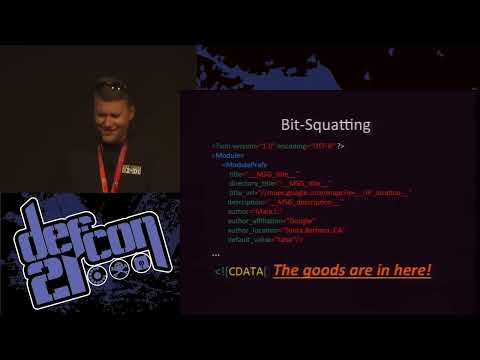
Cited in threads on ECC memory, CPU reliability, and bitsquatting as evidence that bit flips cause real DNS misdirection.

Cited as a cool, concrete visualization of Wi-Fi interference patterns.

Cited as a quick, visual explanation of IEX's deliberate latency and of artificial delay as a fairness tool.

HN uses it as the standard example of sneakernet media distribution via hard drives.

Recommended as the deep, expert RF analysis behind Starlink's hardware.

It is the standard citation in IPv6 threads that large mobile carriers already run phones with only IPv6 addresses.

HN cites it as the Netflix case for staying close to -CURRENT and upstreaming changes.

Recommended as the companion explanation to the Espargos project, showing how phase and time differences localize devices.

Linked as a nostalgic and clear way to see what the modem handshake is doing, and as an example of sounds people can recognize.

Mostly cited as the source of the Krebs critique of Cloudflare and Prince's onstage response, which commenters debate.

HN cites it in IPv6 threads as an example of a large adopter, especially for address-space collisions after mergers and conflicts in 10/8.

Cited as the primary source for why Netflix uses FreeBSD and UFS rather than ZFS on its CDN boxes, and for its GPL reasoning.

It is cited for the cost of network round trips and mobile latency limits.

HN cites it as evidence that scanning the whole IPv4 address space is trivial and takes only minutes to hours.

Cited as primary footage of web pioneers discussing the future of the internet, such as Berners-Lee's concerns.

HN cites it as a prime example of FreeBSD tuned for extreme network performance at massive scale.

Shared in dial-up nostalgia threads as a way to both hear and understand the handshake.

HN cites it to show how seriously root key ceremonies are secured and to let people watch one.

Cited as the primary source for T-Mobile US running IPv6-only mobile clients in IPv6 adoption debates.

Linked as the original demonstration whenever battery-free or energy-harvesting wireless communication comes up.

Cited as context for Cuba's Street Net and as an example of grassroots networks built under constraints.

Linked whenever email validation comes up as a fun illustration of how deceptively difficult it is.
Which of these have you already seen?
Connect YouTube and HackerTube AI hides what you've watched and ranks the rest for you.