
HN has recommended it for a decade as the standard explainer on automation and unemployment, though skeptics later cite it as an example of overconfident predictions.
Topics › AI, Machine Learning & Data
The best robotics videos, according to Hacker News
100 videos about robotics that Hacker News commenters keep pointing each other to, ranked by how many separate months they were recommended. Part of AI, Machine Learning & Data.

HN points to it as the best explanation of how Zipline's whole system works and as an example of drones doing real, useful work.

HN commenters cite it as the clearest look at Zipline's real-world drone operations, especially for medical delivery and the solved noise problem.

HN repeatedly recommends it as an awe-inspiring example of engineering problem solving and the go-to explainer on how Mars landings work.

HN invokes it as the standard reference whenever drone swarms, autonomous weapons or military AI come up in the news.

It is the standard answer when someone asks what happened to drone delivery.

HN commenters point to it as the start of a gripping, wonder-inducing build saga by a prolific maker of ambitious mechanical projects.

HN keeps citing it whenever drone swarms, autonomous weapons or AI warfare come up, as a believable depiction of where this leads.

HN commenters point to it as a nice introduction to micromouse and maze-racing robots.

Recommended as a gripping look at how hard Mars entry, descent and landing is.

Recommended as a spectacular example of bio-inspired robotics, and a pointer to Festo's other work.

HN returns to it as the classic jaw-dropping demo of legged robots handling rough terrain, and as a historical marker for how long such robots have existed.

Plugged repeatedly in AI and drone threads as a concise statement of the dangers of automated weapons.

HN calls it a great, impressive engineering project involving real-time trajectory calculation.

HN commenters recommend it as the physical-machine take on replicating handwriting, with plenty of explained iteration.

HN commenters bring it up in book-scanning threads as an impressive non-destructive method that is not commercially available.

HN cites it as an astonishing glimpse of advanced thought-controlled prosthetics.

Recommended as a convincing counterargument to the widely repeated idea of the uncanny valley.

HN uses it as primary-source evidence on how Tesla's vision-based driving stack and training pipeline work.

Offered as a clear, well-made look at a real, working drone-delivery system, often in answer to skepticism about delivery drones.

HN uses it as the benchmark for state-of-the-art humanoid robot mobility in discussions of Tesla Bot and robotics progress.

Brought up as a favorite and as an inspiration for small, cheap jumping robots for obstacle crossing and planetary exploration.

Pointed to in AI safety debates as a short explanation of why encoding human values as simple rules is so hard.

Recommended as a short, fascinating introduction to how simple sensor-actuator machines can appear intelligent.

HN cites it whenever drone swarms or autonomous weapons come up, as a dramatized warning that now feels increasingly plausible.

Julia fans point to it as a concrete example of Julia working for soft real-time robotics, especially when avoiding heap allocation.

Cited in automation and robotics threads as the example of a warehouse built robot-first.

HN cites it as an example of what 1kHz vision and fast control loops enable, in threads about AI hardware and robotics.

HN cites it as primary-source history of AI hype and skepticism, and for the vintage Freddy robot footage.

Used to show what Kiva-style warehouse automation actually looks like: simple wheeled robots moving racks to humans.

HN cites it as the standard example of advanced warehouse automation in grocery fulfillment.

HN brings it up in drone threads as a favorite tech talk and as evidence of how weak consumer drone security is.

Cited in discussions of drone performance and of how drone footage conveys the real speed of an F1 car.

Linked as a data point on the state of humanoid robot manipulation in 2023.

HN cites it as striking evidence of long-standing kinetic interceptor and hover-control technology.
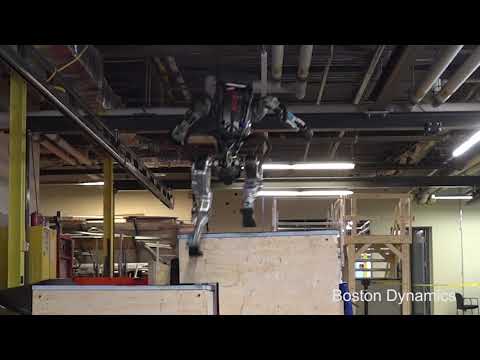
HN cites it as a striking demonstration of how far humanoid robot agility had come.
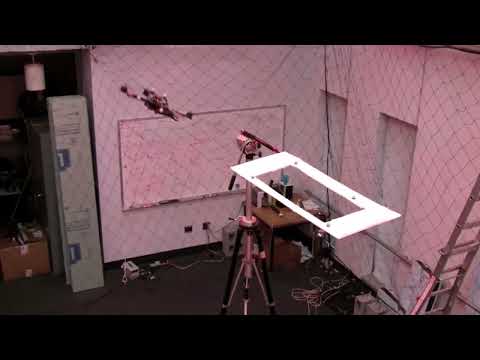
Cited as a landmark demonstration of how capable autonomous drones had become, mostly in threads about drone delivery, swarms and drone warfare.

Linked in drone and military AI threads as a chilling dramatization, though some find it alarmist.
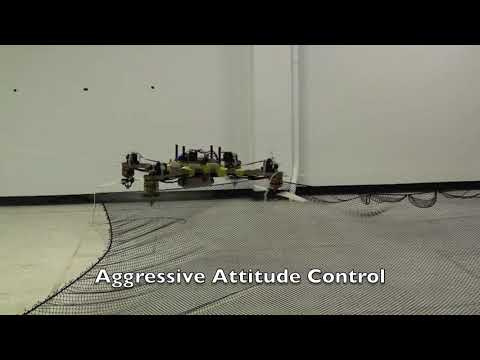
Referenced in drone threads as a demonstration that variable pitch quadcopters fly well with little drift.

Used as the go-to demo of robot resilience when Boston Dynamics comes up.

It is the standard citation in drone and eVTOL threads for the claim that multirotors can survive a failed rotor with the right control algorithm.

HN uses it as the go-to illustration of Moravec's paradox and as a baseline for how far robotics has come since 2015.

Commenters cite it for Karpathy's views on Tesla versus Waymo, neural networks as a path to AGI, and the quality of internet data for LLMs.

Brought up whenever reaction wheels or self-balancing cubes come up, with the jump-up maneuver singled out as the coolest part.

HN cites it as an earlier, smoother precedent whenever new learned-locomotion or simulated-walking work appears.

HN cites it as a glimpse of in-house, highly automated hardware manufacturing and the scale of a lights-off factory.

HN links it as the official demo showing what Stretch actually does, though some commenters point out its limits, such as picking boxes from one side.

Cited as a benchmark for how capable robots already are when HN debates AI, humanoids and automation.

Cited as a vivid example of machines outpacing human reaction times and of high-speed robotic vision.

Mostly cited as an example of robots doing warehouse and logistics work in automation discussions.

Used as an early, concrete example of robotic kitchen automation when HN discusses robot chefs and baristas.

Used as a reference point in discussions of autonomous weapons, as a once-sci-fi scenario that now looks prescient.

Cited critically as a famous failed demo, to mock ASIMO or the state of humanoid robotics.

Cited as a harder real-world version of the pole-balancing problem and as proof that chaotic systems can be controlled.

Used as a data point on how capable humanoid robots are at practical tasks, with commenters noting how far they are from household chores.

HN commenters link it as a concrete picture of Kiva-style robotic warehouses whenever threads discuss warehouse automation and same-day delivery.

HN cites Zipline as an example of a drone company doing meaningful work with a fixed-base delivery approach.

HN cites it as evidence that cheap, capable humanoid robots from Chinese companies are arriving, often in contrast to Tesla's Optimus.

HN uses it purely as a joke reference in threads about autonomous weapons, robots and malfunctioning automation.

Mentioned in passing as an example of practical legged robots and as a comparison point for hexapod projects.

HN cites it as an example of automated cloud labs and AI already running physical experiments.

HN points to it as proof that manned multicopters and eVTOL craft existed well before the current hype.

HN cites it as a well-known early example of FPV drone flight in drone and regulation discussions.

HN cites it as evidence that lights-out factories exist, though one commenter notes it is outdated relative to current automation.

Cited in surveillance threads as a concrete example of persistent wide-area aerial surveillance that already existed in 2013.

Cited as a simple example of automated driving maneuvers beyond what human drivers can do.

Mostly cited as an example of the state of LLM-controlled robots, with some skepticism that it is a polished demo video.

HN invokes it as a joke about Tesla's overpromised robotics and AI claims.

HN uses it as a go-to example of drones and robotics doing construction work.

Referenced as evidence of Tesla's humanoid robot progress and its data collection efforts.

HN refers to it as the viral university video that showed what autonomous multicopter swarms can do and helped spark interest in multicopters.

HN cites it in robotics threads as proof that legged machines were mechanically feasible in the 1960s, long before Boston Dynamics.

Used as a go-to demonstration of how far dynamic robot locomotion has come.

HN cites it as an example of programmable airburst ammunition used against drones and fast aircraft.

HN cites it to show that a quadcopter can keep flying after losing a rotor, though under ideal lab conditions.

Cited as the reference example of a real fast legged robot, often to distinguish it from MIT's Cheetah.

Cited only as an example of humanoid robots in development, not as something to learn from.

HN commenters cite it as an example of a hard, chaotic control problem that fast feedback and good control design can solve.

HN brings it up only as a joke about robot uprisings and future AI overlords.

Used as a benchmark for robot agility, with debate over how much was choreographed or real-time.

HN uses it as a quick example of reinforcement learning agents acquiring locomotion in simulation, rather than recommending it as a deep resource.

HN cites it as a practical use case for jet suits in emergency response, though some doubt how usable the suit is.

HN cites it as the benchmark for how hard and slow robot laundry folding was, in threads about household robots and AI progress.

HN cites it as evidence that microwave and electromagnetic weapons against drones are real and already tested.

Treated as a primary source on how Tesla builds its self-driving stack, cited by timestamp for transformers, synthetic data, Dojo and the humanoid bot.

Cited in drone regulation discussions as evidence that quadcopters can injure people.

Cited as a snapshot of Chinese humanoid robot capability, with some commenters doubting its authenticity.

Cited as proof that machines solved the cube in under a second years ago, often as the earlier record before newer robots.

Cited as evidence that autonomous driving has been demonstrated for decades and that progress was slow.

Used as an example of existing anti-drone-swarm defences in threads on drone warfare.

Used as a benchmark of robotics progress and a go-to example of impressive bipedal walking in AI and automation debates.

HN links it as the go-to example of fast robot reactions and robots playing table tennis, with some skepticism that it was staged marketing.

Brought up whenever robotic or automatic EV charging comes up, as the memorable 2015 demo that never became a product.

Linked as an example of the honest, self-aware way Tom Scott treats VPN ads and their legitimate use cases.

HN commenters point to it as evidence that robots can already learn manipulation tasks quickly, using diffusion-based policies.

HN cites it for the live demo of multicopters flying with fewer working rotors.

Used as a reference point when comparing other legged robots, such as the MIT Cheetah, on gait and speed.
Used as a vivid example of spinal pattern generators and morphological control in locomotion discussions.

Used as a Skynet joke and cited as a parody that fooled some viewers into thinking it was real.

HN commenters cite it as a fun real-world example of Spot hauling a passenger whenever Boston Dynamics robots come up.
Which of these have you already seen?
Connect YouTube and HackerTube AI hides what you've watched and ranks the rest for you.