
Frequently recommended in autonomous vehicle and Waymo threads as the main counterargument, a long but worthwhile video essay on how self-driving cars could affect cities.
Topics › AI, Machine Learning & Data
The best self-driving & autonomous vehicles videos, according to Hacker News
67 videos about self-driving & autonomous vehicles that Hacker News commenters keep pointing each other to, ranked by how many separate months they were recommended. Part of AI, Machine Learning & Data.

HN returns to it repeatedly as one of the best candid talks on how a real self-driving system sees the road and where it struggles.

HN repeatedly points to it as the best public technical overview of Tesla's FSD approach, used both to defend and to critique Tesla's progress.

HN recommends it for Hotz's reasoning on cameras versus lidar and for an opinionated, original thinker's overview of comma and openpilot.

HN cites it as a concise, well-illustrated explanation of traffic flow, in threads on congestion, self-driving cars and driving habits.

Commenters recommend it as an entertaining, wide-ranging interview, and cite it for Hotz's views on end-to-end neural-net driving.

HN commenters point to it as a candid, contrarian view of self-driving approaches and the real limits of the business.

Cited for Karpathy's first-hand explanations of camera-only self-driving, transformers and ML trends.

HN commenters cite it in Tesla threads as the primary-source explanation of why Tesla removed radar and how its vision depth estimation works.

HN cites it in discussions of sponsored science content and Veritasium's credibility, usually as the go-to critique.

Cited both as a primary source on Tesla's technical autonomy approach and, later, for Musk's unmet robotaxi predictions.

Pointed to during self-driving news threads as an insider view of Waymo's progress, deep learning's role and its limits.

HN uses it as primary-source evidence on how Tesla's vision-based driving stack and training pipeline work.

HN recommends it as a technical talk aimed at a real engineering audience, with live demos of perception and pre-mapped roads.

HN uses it as the reference demonstration in lidar versus camera debates, though some critics fault its methodology and style.

Recommended as an accessible technical explanation of Mobileye's approach, and also cited in disputes over Tesla Autopilot.

Cited in self-driving threads as a firsthand look at robotaxi rides, mostly to point out its glitches and doubts about readiness.

HN uses it as a widely seen, fairly balanced real-world appraisal of FSD, both for its impressive moments and for its manual takeovers.

Cited as evidence that Yandex already runs capable self-driving cars in harsh weather, though some commenters doubted the footage.

Used in Who's Hiring posts as the company's demo and in self-driving threads as a notable bad-weather example.

Cited in self-driving threads as the source of Tesla's vision-only stance, usually to discuss or push back on it.

HN cites it as the primary source for Tesla's vision-only reasoning, LIDAR arguments and sensor fusion challenges.

HN uses it as evidence of how rough Tesla's self-driving was in 2021, usually in skeptical threads.

HN mostly cites it as a record of Musk's self-driving claims and timelines, often sarcastically in threads about missed FSD promises.

Commenters cite it for Karpathy's views on Tesla versus Waymo, neural networks as a path to AGI, and the quality of internet data for LLMs.

HN people share it as first-hand evidence that driverless Waymo rides were already happening, including navigating a busy mall parking lot.

Used repeatedly in self-driving threads as a demonstration of how many real-world edge cases the Google/Waymo system already handled.

Mostly cited critically, as an example of a staged or cherry-picked self-driving demo and of misleading autonomy marketing.

Cited in threads on motorcycle safety, Tesla's sensor choices and autonomous vehicles as a well-made explanation of the failure mode.

Cited as a concrete example of Autopilot's limits whenever threads debate self-driving safety and Tesla's claims.

HN cites it mainly critically, as one of several tests used to question Tesla's collision avoidance compared with lidar systems.

Cited as the canonical visualization of signal-free intersections whenever HN discusses autonomous cars and road throughput.

HN cites it as evidence of Autopilot's behavior around lane gores, mostly in critical comments about Tesla.

Cited as a reference in self-driving threads for what the car senses, such as sensor range, LIDAR and planning, although some commenters were critical of it.

Used as evidence that Uber's dashcam footage misrepresented how well lit the road was.

Mostly cited as a primary source for Musk's statements on self-driving and other topics, often with skepticism about his depth.

Mostly cited as a primary source for what Tesla and Musk said about Autopilot and automatic charging at the time.
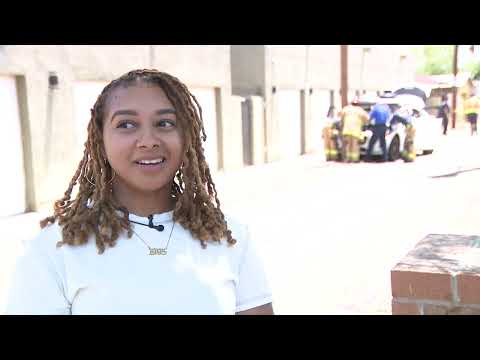
HN cites it as evidence that robotaxis can still have odd, avoidable crashes, usually in threads that criticize self-driving safety claims.

HN cites it as footage proving that autonomous driving was demonstrated in Europe decades before the current wave.

Used in driver-assistance threads as an example of defeating hands-on-wheel checks on level 2 systems.

Used as a joke or as a reference to Google's April Fools pranks and the idea of autonomous bikes, not as something to learn from.

HN cites it as an example of Autopilot failures in discussions about the limits of Tesla's driver assistance and self-driving.

HN cites it as evidence that self-driving cars can obey traffic cops, though some call the scenario idealized.

HN uses it as a real-world test of anti-collision systems in discussions of Tesla Autopilot and self-driving safety.

Cited as a simple example of automated driving maneuvers beyond what human drivers can do.

HN uses it as the classic example of chaotic Indian traffic, especially in threads about self-driving cars and spontaneous order on roads.

Cited critically as evidence that early Autopilot 2 was unsafe and overpromised.

It is cited as evidence that other drivers could reproduce the Autopilot behavior in the fatal crash, mostly in critical discussions of Autopilot safety.

HN refers to it as a pop-culture picture of autonomous vehicles, not as something to watch for its content.

HN cites it as a real-world look at Huawei's lidar-based driver assistance when comparing against Tesla FSD.

HN cites it as an example of the limits of driver-assist safety systems, often with the caveat that the pedestrian-detection option was not fitted.

HN commenters cite it as proof that autonomous driving was demonstrated decades before the current boom.

Cited as a cautionary example whenever collision-avoidance or self-driving safety systems come up.

Cited as evidence of Waymo's progress in Arizona and its lead over competitors.

Cited as an early milestone of autonomous driving, and later as an example of over-optimistic timelines.

Cited as the source of Levandowski's remark agreeing with Elon Musk that lidar is a crutch.

Treated as a primary source on how Tesla builds its self-driving stack, cited by timestamp for transformers, synthetic data, Dojo and the humanoid bot.

comma.ai repeatedly links it in its 'Who is hiring?' posts as a demo of its open source driving agent.

Cited repeatedly in Tesla threads as concrete side-by-side evidence that Tesla's self-parking lags other manufacturers, undercutting its full self-driving claims.

Cited as evidence that autonomous driving has been demonstrated for decades and that progress was slow.

Cited in Autopilot threads as an example of Tesla driver-assist systems rear-ending stationary vehicles.

Cited as evidence that FSD beta is unsafe and that self-driving is far from solved.

HN mostly cites it critically as evidence that early Waymos drove hesitantly, though one commenter points to the full video for context on a braking incident.

Used mostly as evidence of FSD Beta's limitations, for example pulling out in front of fast traffic.

HN mostly cites it as a ride-along example of driverless cars while many criticize it as sponsored content that understates limitations.

Cited in self-driving threads as a documented case of a robotaxi failing at traffic cones, with some comments also noting the support team response.

Used as a compact exhibit of Musk's repeatedly missed self-driving timelines, not as a recommendation.
Which of these have you already seen?
Connect YouTube and HackerTube AI hides what you've watched and ranks the rest for you.