
HN calls it mandatory viewing on the AGC, praising the speaker's enthusiasm and the clear account of restartable, robust software design.
Topics › Physics, Space & Chemistry
The best space exploration & spaceflight videos, according to Hacker News
163 videos about space exploration & spaceflight that Hacker News commenters keep pointing each other to, ranked by how many separate months they were recommended. Part of Physics, Space & Chemistry.

HN strongly recommends it as the clearest, best-illustrated explanation of the solar gravitational lens idea, and links it whenever exoplanet imaging comes up.

Repeatedly called the best and most comprehensive AGC talk, with commenters rewatching it and treating it as foundational computer architecture learning.

HN commenters cite it as a landmark launch broadcast, and also dissect details like the duplicated booster landing feeds.

Commenters point to it whenever Artemis, SLS or Starship refueling comes up, as a candid and critical engineering assessment delivered directly to NASA.

HN cites it as evidence of Musk's hands-on engineering depth and for his advice to question requirements and not optimize things that should not exist.

HN commenters return to it for perspective, comfort and Sagan's soothing voice, and suggest watching it periodically.

HN people recommend the whole AGC restoration series as a deeply nerdy look at real Apollo-era hardware, including core rope memory.

HN commenters repeatedly link it as the best concise answer to the question of why go to Mars when problems remain on Earth.

It is the go-to explanation whenever a thread touches on imaging exoplanets or solar gravitational lens telescopes.

HN commenters cite it whenever rocket launch pollution comes up as a rebuttal to alarm, since it shows launches are small next to other sources.

HN commenters offer it as the likely future of cheap access to space, feasible without exotic materials.

Recommended whenever threads need an intuition for the vast distances between stars.

HN recommends it as a rare look inside a rocket factory and cites it for manufacturing details like welding methods.
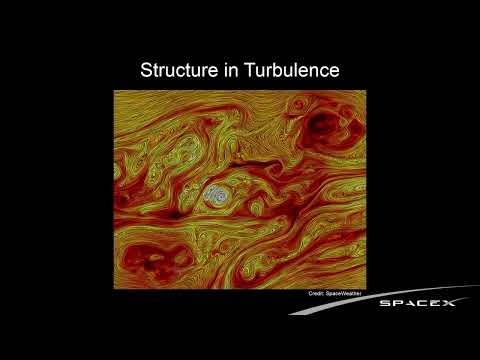
HN points to it as evidence of SpaceX's serious simulation capability and as a showcase of GPU compute for CFD.

HN repeatedly recommends it as an awe-inspiring example of engineering problem solving and the go-to explainer on how Mars landings work.

HN commenters send people here as the best accessible starting point for understanding why Raptor and fuel choice matter for Starship.

HN people point to it as an excellent explanation of using Earth's atmosphere or gravity as a lens in astronomy threads.

HN returns to it whenever moving the solar system, Kardashev civilizations or generation ships come up, with some calling it their favorite Kurzgesagt video.

The standard explainer HN links in satellite and debris threads for the collision-cascade risk.

HN repeatedly recommends it as an excellent explanation of why flying on Mars is hard and how the helicopter was built.

HN commenters cite it whenever a thread involves ignored warnings, shortcuts or routine risk, as the clearest introduction to the concept.

Recommended as a thorough, speculative-but-grounded overview of the magnitude of colonizing Mars.

Offered as a readable explainer whenever Venus terraforming or alternatives to Mars colonization come up.

HN links it whenever the Moon's orbit comes up, as a concise explanation of why the Moon always curves toward the Sun.

Commenters recommend it for the sense of wonder and chills it gives, and bring it up in threads about Bowie, space and astronauts.

HN links it in Mars-colonization threads as a concise case for Venus.

Recommended as a clear explanation of Starlink's purpose and the case that it can beat fiber on latency for long routes.

Recommended as a gripping look at how hard Mars entry, descent and landing is.

Recommended as a sobering, accessible overview of the practical challenges of living on Mars.

HN recommends it for its raw, mostly natural audio and for conveying the speeds and violence of a shuttle launch and booster descent.

Recommended whenever rocket engine cycles or turbopumps come up, as a clear introduction from a trusted explainer.

Commenters repeatedly recommend it in JWST threads as a great explanation of clever mechanical design that is accurate and long lasting.

Recommended to anyone asking whether space exploration is worth the cost.

HN commenters recommend the series for its in-depth, hands-on explanation of how V2 turbopumps and peroxide decomposition work.

Recommended in launch threads as an immersive way to hear what a Falcon Heavy launch actually sounds like.

HN points to it as an entertaining and informative look at the SpaceX versus ULA rivalry.

HN points to Handley's simulations whenever Starlink latency comes up, as the best visualization of orbits and why laser links could beat fiber over long distances.

Recommended as an amazing blind-debugging story with deep detail on 1970s spacecraft computing.

Recommended as a motivating, long-horizon vision that puts everyday concerns in perspective.

Recommended as a solid history and explanation of GPS, especially when GPS outages or accuracy come up.

HN readers point to it as a clear explanation of a theoretical fuel-free propulsion concept from a channel they respect.

Recommended in Mars-mission threads as an accessible account of Zubrin's argument that Mars is feasible within a decade.

HN recommends it as a sober analysis of 'Oumuamua theories that counters the alien-spacecraft claims.

HN recommends it in Voyager threads as a good talk on how these old computers have proved durable and adaptable.

Recommended in orbital data center threads as a thorough, numbers-based assessment.

HN recommends it as an accessible in-depth explanation of how Webb works and why its deployment was remarkable.

HN recommends it as the best explanation of why engine start is hard and what can go wrong.

HN uses it as evidence that SpaceX iterated through visible failures and is open and humorous about them.

Posted in space-spending threads as a classic critique of priorities, usually with a quip.

HN commenters credit it for inspiring their own satellite-reception hobby and praise the channel's high-quality content.

HN points to it as the best accessible explanation of the solar gravitational lens mission plan.

Cited in Starlink latency debates as a clear visual analysis showing sub-100ms latency is plausible even without inter-satellite links.

Held up as an iconic, perfectly timed piece of television whenever Burke or Connections comes up.

HN recommends it as an energizing space-themed song, and references it when Apollo go/no-go calls come up.

Recommended as a clear, roughly 30-minute summary of the problems with the SpaceX IPO.

HN treats it as the more informed, balanced take on SpinLaunch's tradeoffs.

HN recommends it as an entertaining, technical illustration of how hard the Shuttle's one-shot dead-stick landing was.

Commenters share it as a favorite vintage NASA film with a sobering look at how dangerous hypergolic propellants are.

HN cites it as the one dramatic real-world proof that a launch escape system works.

Commenters recommend it for the remarkable remote reverse engineering done on decades-old hardware with no simulator.

HN people recommend it as a fantastic maker project among Apollo anniversary builds.

HN commenters recommend it as the best overview of power satellites, with pros and cons beyond the construction cost.

HN commenters recommend it as the deepest explanation of how AGC rope memory works and how it differs from core memory.

HN commenters point to it as a thorough, free lecture series for anyone wanting the nitty-gritty of GPS and GNSS.

HN cites it as a source for specific Musk anecdotes and as an immensely interesting full conversation.

Recommended as a wonderful overview of the AGC architecture, though one commenter found it uninspiring.

Linked in space and Soviet-history threads as striking footage of the rotting Buran shuttles.

Commenters recommend the series for hearing an operations supervisor explain how Voyager signals are actually received.

A few commenters recommend it as a skeptical take on Starlink economics, though others see it as dishonest.

HN links it in SpaceX landing threads as the best first-person view of how hard a booster landing is.

Shared in Voyager news threads as an accessible look at the real equipment used to talk to the probes.

HN shares it as a nostalgic, historic moment, noting the cheers at each milestone and Musk's address to employees.

HN users cite it as the explanation of the tricks around the IPO and the index-inclusion rule changes.

Recommended in Voyager threads as a documentary about the team keeping the probes alive.

Cited as an example of impressive amateur-scale rocket work, and as a vertical-landing test that predates and rivals SpaceX's Grasshopper.

HN references it for launch footage and the atmosphere of the first Falcon Heavy flight, including the center core landing failure.

It is the primary source for the original Starlink concept, so commenters cite it for Musk's stated goals on latency, hops, pricing and timelines.

HN commenters cite it as the go-to reference for the idea of living in Venus's atmosphere rather than on the surface.

Pointed to as a credible, engineering-informed answer to whether space data centers are feasible, from someone with deep space knowledge.

HN commenters recommend it for its slow-motion view of the first seconds of liftoff and cite it when comparing launch pads and engine behavior.

Pointed to in SpaceX threads as a window into the company's ambitions and leadership.

HN points to it as a convincing energy-budget analysis in debates over space datacenters, while debating its assumptions.

Recommended in Voyager threads as the best look at how operators actually contact the probe.

HN recommends it to see how Musk actually talks and thinks about engineering, unedited and in depth.

HN recommends it as a fascinating history of Soviet staged-combustion engines and why they stayed in use in American rockets.

HN points to it as a concise, technically grounded rebuttal to moon-hoax claims.

Recommended as the practical guide for anyone planning to attend a Starship launch in person.

HN commenters cite it as evidence of Musk's engineering thinking, on questioning requirements, organizational errors mirroring product errors, and Conway's Law, and to argue about whether he is a strong engineer.

Recommended in orbital data center threads as a sober explanation of why the idea doesn't work out economically or thermally.

Recommended as a great, understandable tour of life and equipment aboard the International Space Station.

HN people link it as an old-timey explainer for nuclear thermal propulsion, and as evidence these engines were already built and tested.

Linked during Starship launches and testing as a live view that needs no login and shows the rockets actually being built.

Linked as the clear explainer on rotational gravity and its Coriolis oddities.

Recommended for its detailed and clear look at Starlink hardware and beamforming.

Recommended as the introductory explainer whenever rotating detonation engines show up in the news.

Cited again and again as the concrete case study behind the claim that NASA got a 15,000x speedup moving from Simulink to Julia.

Cited in cosmology threads as an accessible visual explanation of the unreachable universe and its expansion limits.

Linked in Reaction Engines threads as the story behind the engine, though one commenter is skeptical of the company's funding record.

Mostly cited as a contrarian critique of Starlink's viability; some defend its economics argument while others dismiss it as repetitive.

HN brings it up as the sharpest satire of scientists who serve whoever pays them, and as a favorite Lehrer song.

HN links it as a nice intro to what a realistic Dyson swarm would require, and as a companion to megastructure discussions.

Recommended as a long, wide-ranging look into Musk's thinking, especially on AI and the future of humanity.

Cited as a source for the feasibility of colonizing the universe with self-replicating probes and for building a Dyson swarm from Mercury.

HN shares it as the go-to visual for the idea of crewed blimps floating above Venus.

HN cites it in asteroid threads for how well-tracked large asteroids are and how hard deflection is.

HN cites it for Feynman's insights on NASA risk reasoning, blame and engineering culture, and the contrast between Apollo and the Shuttle.

Cited in Musk-related threads as a critical perspective on his futurism and his projects, such as hyperloop.

Linked as a worked look at the maths and assumptions of orbital sunshades, which concludes they are impractical.

Cited as an example of someone publicly changing their mind on the Moon landing hoax and of why skeptics had rational-seeming doubts.

Used as the go-to clip showing SpaceX's reusable-rocket landing tests, often in comparisons with other vertical landing programs.

HN cites it as the classic example of a launch abort test that proved the design even though the rocket failed.

HN points to it as a rare, detailed first-person explanation of Raptor engine design from Musk himself.

HN uses it as a firsthand account from an astronaut who worked with Musk, cited in arguments about Musk's engineering ability and SpaceX culture.

HN pointed people to it for the original interview and Musk's concise take on first-principles thinking.

HN links it as the quick explanation of why you cannot just throw things into the Sun.

Cited as a striking, counterintuitive example of extreme thermal insulation and hard materials science.

HN cites it as the landmark example of a hobbyist landing a rocket, and recommends the channel for following that progress.

Cited in Lisp and safety-critical software threads as the definitive firsthand account of the DS1 remote REPL debugging episode.

HN cites it as an intuitive demonstration of the Coriolis effect and the practical problems of spinning habitats.
Which of these have you already seen?
Connect YouTube and HackerTube AI hides what you've watched and ranks the rest for you.