
HN commenters repeatedly say it changed how they hear political speech and recommend it for understanding why opponents are not simply stupid.
Topics › Politics, History & Society
The best us politics & elections videos, according to Hacker News
186 videos about us politics & elections that Hacker News commenters keep pointing each other to, ranked by how many separate months they were recommended. Part of Politics, History & Society.

HN treats it as the go-to layperson-friendly argument against e-voting and links it in nearly every voting-technology thread.

A perennial HN recommendation whenever lobbying, SOPA, taxes or political corruption come up, with several commenters saying it changed their views.

Recommended often as a clear explanation of why the US system is built to be slow and why gridlock protects minorities.

HN commenters recommend it as a long, evidence-backed theory for what changed in the 1970s and why Congress is broken, even when they are unsure they agree.

HN cites it often in debates on inequality, cost disease and stagnant middle-class income, praising its data-driven approach.

HN cites it repeatedly as the root-cause argument that money in politics must be fixed before other issues, and as background for his Mayday PAC.

HN's go-to explainer for why FPTP leads to a two-party system, linked in countless voting-reform and US politics threads.

HN commenters hold it up as a model of persuasive public speaking and as the go-to reminder of why public broadcasting deserves funding.

HN's go-to link whenever ranked-choice voting or voting reform comes up, because it explains the mechanics quickly and entertainingly.

HN's default link for explaining STV in any thread on voting reform, ranked choice or gerrymandering.

It is the go-to short explainer HN commenters link whenever e-voting, voting machines or online voting come up.

HN returns to it constantly as the definitive critique of adversarial TV punditry, still seen as relevant to polarized media and online discourse.

Recommended for Baldwin's riveting delivery and as an example of serious debate between opposing worldviews.

It is HN's go-to link in threads on lobbying, campaign finance and political dysfunction, as a clear statement of Lessig's root-cause argument.

HN commenters point to it in election-security threads as an accessible explainer of how a vote can be verifiable but not sellable.

It is the go-to short explainer HN links when voting system alternatives, MMP or German-style elections come up.

HN commenters cite it in voting-reform threads as a visual argument that cardinal systems (STAR, approval) beat plurality and ranked-choice voting.

HN recommends it as a concise, chart-backed explanation of the economics behind anti-establishment politics.

HN recommends the series for explaining the tactics and mentality of bad-faith online arguments.

HN commenters recommend it as a data-driven explanation of the 2024 election and voter trends.

HN commenters use it as proof that the climate problem was clearly explained decades ago, and as a model of clear communication to a broad audience.

Recommended as a short, clear introduction to these two concepts for making sense of current politics.
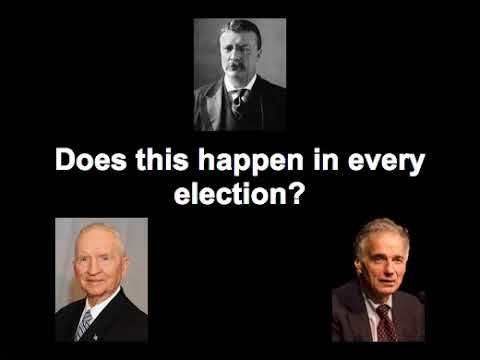
The standard link in ranked-choice voting threads to show IRV does not eliminate the spoiler effect.
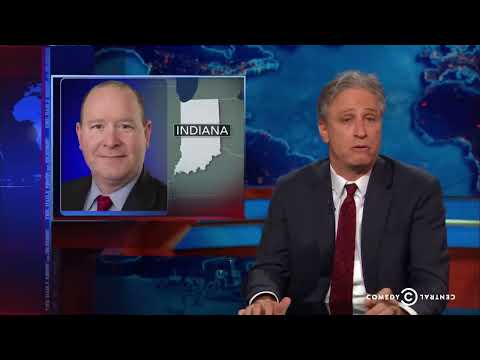
Commenters call it a favorite Daily Show clip and link it as a ready answer to climate-skeptic arguments.

HN commenters recommend it as a data-oriented discussion of race and police shootings.

Recommended as a funny but surprisingly persuasive outsider take on gun control, mainly in gun-related threads.

HN people point to it as a starting place for understanding how money corrupts American government.

HN recommends the lecture series as a foundational, wide-ranging grounding in modern global politics.

Shared after the 2016 election and later as a pithy account of why Trump won and why political division needs to be moved past.

HN points to it as an entertaining and informative look at the SpaceX versus ULA rivalry.

HN commenters cite it whenever a thread touches on tax complexity, loopholes, or why companies like Intuit benefit from a convoluted tax system.

HN cites it as a vivid example of media consolidation and coordinated messaging.

Cited as a thoughtful video essay and for its model of in-group hierarchy in political threads.

HN points to it as the company's own pitch, used in debates about data-driven manipulation and extrapolated to today's AI.

HN posts it in COVID origin threads as a blunt comedic take on why the lab leak question deserved investigation rather than dismissal.

Linked in electoral-system discussions as a quick, clear argument against the electoral college.

Cited in tuition-cost threads for the argument that easy government-backed loans enable high prices.

HN recommends it as an entertaining demonstration of how powerful algorithmic gerrymandering can be.

HN commenters cite it in pandemic-era threads about early treatments and ivermectin, though the claims are contested.

Suggested as a starting point for understanding Yang's capitalist case for UBI, though some note it is long and dated.

HN points to it as a primer on Thiel's thinking and as an example of Peter Robinson's skill as an interviewer.

HN commenters cite it as a brief summary of the problem and the proposed Anti-Corruption Act solution when arguing for getting money out of politics.

HN recommends it as a short, clear illustration of how first-past-the-post misrepresents voters.

HN recommends it as an accessible way to understand why people across the political spectrum disagree and to better understand opposing views.

HN commenters share it during DOGE and government-cuts threads as a summary of the billionaires' aims, though many only cite it as a reference.

Quoted in economics threads about growth, work and basic income as a classic critique of GDP.

HN mostly uses it as a reference for a skeptical take on Russiagate media coverage, and some link it to give context on the reporter.

HN shares it as an inspiring account of citizens changing Washington, especially after Swartz's death.

Recommended as a revealing look at how politicians and news anchors behave off camera and how packaged news feeds were produced.

Commenters point to it as a well-researched explainer of the history and culture behind China's current position, despite the political title.

HN points to it as the primary evidence of what Cambridge Analytica was willing to do, especially in Facebook data scandal threads.

Frequently linked as a compact summary of the Princeton study when commenters argue Congress ignores public opinion.

Linked in political threads as a short, accessible companion to Snyder's book and as a reminder not to obey in advance.

HN people use it as a quick, entertaining primer on territory status, citizenship versus nationality, and voting rights.

Commenters link it as the full primary source so people can judge for themselves how the remarks were quoted and portrayed in media.

HN commenters link it as the primary source for the phrase 'military-industrial complex' and urge people to hear the full speech rather than the soundbite.

Repeatedly posted in immigration threads to contrast 1980 Republican rhetoric with modern positions.

Occasionally recommended as an in-depth critical take on Shapiro, though mentions are sparse and partisan.

HN commenters cite it as a clear debunking of election-fraud statistics and as a warning against comparing percentages without context.

HN commenters link it in voting-reform discussions as a concise explanation of range voting versus other systems.

Commenters cite it as a visual debunking of Benford-based election fraud claims and as a guide to when Benford's Law does and does not apply.

HN users share it as a brief, good introduction whenever liquid or delegative democracy comes up.

HN commenters link it to explain why plurality voting produces two-party systems and how ranked-choice voting suffers spoiler effects.

HN quotes it whenever debating GDP and metrics of success beyond money.

HN cites it as an entertaining, fact-based explainer of gerrymandering tactics, though one commenter criticizes it as inconsistent.

Cited as a critique of libertarianism, including as a reply to the 'you can always leave' argument.

Shared in surveillance and civil-liberties threads as a powerful rap critique of the US.

HN people recommend it as an unfiltered way to understand Bannon's worldview and the populist movement, and praise PBS for releasing full interviews.

Cited as a classic, catchy explainer of the US legislative process, and half-jokingly as many people's whole civics education.

HN links it as the source for the claim that every post-war president would be indictable under Nuremberg standards.

Cited in tariff debates to show Reagan's own words against protectionism.

HN cites it, often critically, as Nix openly describing data-driven manipulation and targeting methods.

HN mentions it mostly as a condensed summary of that roundtable, in threads about COVID debate and content moderation, and not as a consensus recommendation.

HN commenters point to it as a humorous but pointed look at gun control and at learning from other countries' policies.

Commenters cite it as evidence in arguments about partisan bias at tech companies and as testimony worth watching.
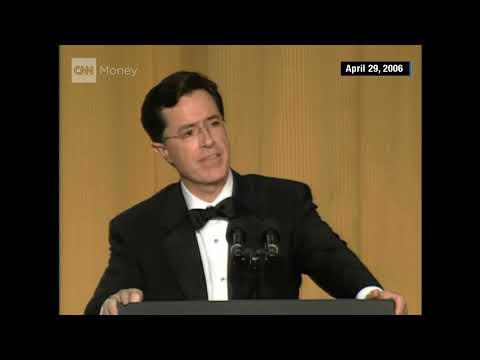
HN cites it as the source of the line that reality has a liberal bias and as a performance people still find phenomenal.

HN links it as the primary source for Assange's remarks hinting at Seth Rich as the leak source.

Cited in threads on American decline, civil unrest and economic crisis as a classic statement of the imperial-decay thesis.

HN cites it as the key piece of evidence that intelligence officials misled Congress, and as a reported breaking point for Snowden.

HN cites it in threads on college admissions and affirmative action as Sowell's argument about unintended consequences.

HN uses it as a go-to overview of the congressional fundraising and lobbying problem whenever money in politics comes up.

Recommended for historically grounded analysis of Putin, and praised as an example of releasing full-length interviews.

Cited as a primary source for Trump's own stated positions, such as replacing income tax with tariffs.

Brought up in housing and zoning threads as a mainstream outlet making the case that progressive NIMBYism contradicts stated values.

Used in political threads as a reference on voter ID laws and their effects, and often rebutted or disputed in the replies.

HN commenters point to it as an easy-to-grasp introduction to Chomsky's ideas on universal grammar and the language faculty.

Cited in election security threads as a watchable overview of voting machine problems.

Cited as a mathematician's debunking of numerical claims of 2020 election fraud.

Posted in threads on US costs and institutions as a famous fictional rebuttal to American exceptionalism.

Cited as a short, concrete example of consolidated media ownership pushing coordinated messaging through local news.

Cited in voting-related threads as a favorite example of street interviews on voter ID, though it is a partisan satirical piece.

Referenced to describe an argument style that rejects incremental improvements, and in discussions of differing liberal and conservative views of society.

HN mostly uses it as a primary-source link in long political arguments about the gesture, not as something to recommend.

HN uses it as a source for what Harris actually said, in arguments about vaccine politics.

Linked as the famous clip of Trump scolding Germany over Russian gas, whenever European energy dependence comes up.

HN mostly links it as background in political arguments or for a memorable moment, rather than as a recommendation.

Posted as a reference clip in geopolitical threads about Israel and US policy, not as a recommendation.

HN mentions mostly use it as an example of extreme views or to criticize participants in political threads, not as a recommendation.

HN mostly uses it as a source for what Trump actually said, and commenters argue over whether it was sarcasm or whether the headline was accurate.

HN commenters invoke it as a shorthand example of climate denial in politics, in threads about climate records and policy, usually critically.

Cited as a primary source for what was actually said, in arguments about Russia and the 2016 election.

Linked as a critical example of official indifference to civilian costs of foreign policy.

Cited as an example of how cable news turns politics into sports-style controversy, not recommended much as a watch.

HN uses it mostly in critical arguments about intelligence agencies and government power over speech and privacy.

Mentioned as an example of Shapiro struggling under tough questioning, and sometimes in critical political comments.

HN cites it as a primary-source quote in discussions of voter suppression.

Used almost entirely as a joke or sarcastic aside about trusting politicians who have lied before.

Cited as a reference whenever threads turn to the NSA, drones, defense contractors or whistleblowers.

HN cites it as an example of the Missouri 'view source' controversy and the governor's attempt to portray viewing HTML as hacking.

Cited in energy-crisis threads as evidence that Germany's dependence on Russian energy was flagged years before 2022.

HN commenters cite it as the canonical example of an intelligence official lying to Congress under oath without consequence.

HN uses it as a critical reference to contrast his campaign promises with later NSA surveillance policy.

Linked in election-era threads as evidence in arguments over whether Trump disavowed white supremacist groups.

HN commenters use it as a primary-source clip for the argument that a currency-issuing government cannot go bankrupt in its own currency.

HN commenters cite it as an example of the film's satire of militarism and fascist propaganda delivered deadpan.

HN commenters cite it as evidence in arguments over who was behind the Nord Stream sabotage, quoting Biden's statement.

Cited in 2022 energy-crisis threads, mostly critically, as proof that Germany was warned about Russian gas dependence.

Cited critically in political threads about US foreign policy and Libya.

HN commenters cite it as the source of the known/unknown unknowns framing, sometimes noting he was unfairly ridiculed for it.
Which of these have you already seen?
Connect YouTube and HackerTube AI hides what you've watched and ranks the rest for you.