
HN treats it as the standard short summary of how power and political incentives work, applied to governments, companies and workplaces.
Topics › Politics, History & Society
The best world history videos, according to Hacker News
146 videos about world history that Hacker News commenters keep pointing each other to, ranked by how many separate months they were recommended. Part of Politics, History & Society.

HN commenters recommend it as a clear framework for placing the current US and world situation within historical debt and empire cycles.

HN's go-to short explainer for the City of London versus London, cited in many finance and UK threads.

HN commenters point to it as a clear, short explanation of one-directional disease spread and the core argument of Guns, Germs, and Steel.

HN commenters strongly recommend it as an audiobook-length, deeply informative introduction to Sumer and early Mesopotamian civilization.

Commenters repeatedly recommend it in tax haven and offshore finance threads as an excellent, low-budget overview of British offshore finance.

HN recommends it as the standard short answer whenever someone confuses Britain, the UK and England.

After the 2022 invasion, commenters spread it widely as an eye-opening explanation of Russian mindset, corruption and propaganda, though a few doubt the presenter's rigor.

HN recommends it as an 80-minute way to get the gist of the book and a different view of what money is.

HN recommends it as the quickest clear overview of the Brexit options, though later commenters note it predates the final outcome.

A favorite entry point to the weird history and privileges of the City of London.

Strongly and repeatedly recommended as a visually distinctive documentary and a guide to postmodern ideas on politics, truth and technology.

HN commenters link it repeatedly in colonial history threads as an eloquent, fact-dense short speech.

HN commenters strongly recommend it for its account of how the Jacquard loom and punch cards led to computers.

HN recommends it for its information-dense maps and voice-over and for showing how commanders decide with limited information.

HN commenters recommend it whenever leaded fuel, toxic chemicals or corporate profit motives come up, praising its storytelling and accessible science.

Strongly recommended as an accessible, well-taught history of Ukraine and a counter to propaganda narratives.

HN recommends it as a funny, fascinating talk on cuneiform tablets and the ancient world by an engaging curator.
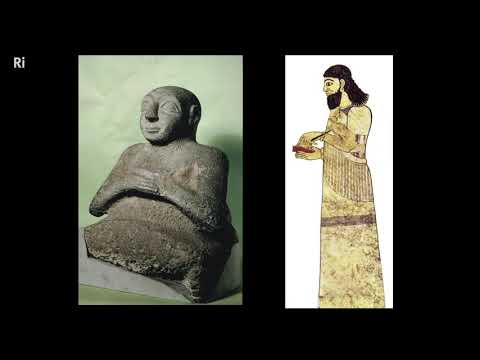
HN users recommend it as a delightful, well-told account of how cuneiform developed and was decoded.

Recommended in threads on ancient games and cuneiform as a charming match with an enthusiastic expert.

HN recommends the series as a funny, coherent high-school-level overview of world history that teaches a lot in a few hours.

HN recommends the series as a thoughtful account of engineering as rule-of-thumb problem solving that predates formal science.

Recommended as the authentic original that many prefer over Werner Herzog's shortened re-cut.

HN recommends it as an eye-opening, once-secret history of where Silicon Valley came from, and cites it whenever the military roots of tech come up.

Recommended as an accessible, easily digestible introduction to the South Sea Bubble whenever financial manias, ICOs or overvalued companies come up.

HN commenters point to it as a masterpiece of humorous archival detective work and a great watch about books and libraries.

Recommended as the best exposition of Tainter's theory, and used to explain slowing innovation, centralization and collapse risk.

HN commenters bring it up in threads on propaganda, influence operations and platforms like TikTok, saying it feels more relevant than ever.

Cited in propaganda and disinformation threads, though some commenters present it more as a prediction of current events than established analysis.

HN points people to it as an entertaining, thorough takedown of Hancock's pseudoarchaeology whenever his claims come up.

Recommended as an informative and funny hour that serves as a good substitute for his book.

HN commenters recommend it as an engaging, high-quality introduction to the Bronze Age Collapse and praise the channel generally.

HN commenters link it whenever the question of how the Earth's size was first measured comes up, calling it a wonderful explanation.

HN people point to it as an entry point to the Hancock and Carlson lost-civilization theories, while noting the ideas are controversial.

It is linked in threads about the Lykov family as an on-location look at the environment they survived in.

Held up as a classic debate with a clear winner and Baldwin's powerful oratory, still relevant today.

Recommended as a short, clear introduction to these two concepts for making sense of current politics.

Cited in threads on cars, streets and urbanism as evidence of how mixed traffic worked before cars took over.

HN recommends it as a short, fascinating story of a scale model preventing a terrible engineering decision.

Recommended in threads on prison labor and American history as a thorough account of the post-Civil War period.

HN commenters call it a passionate and educational history of locks and physical security, and a good starting point for the subject.

HN users recommend it as an impressively well-sourced, academic look at the origins of the Abrahamic religions.

Strongly recommended for its funny, human account of Los Alamos, which one commenter calls almost a stand-up act.

HN commenters bring it up in political threads as a classic warning about divisive agitators and fascism, and suggest it be remade for each generation.

HN commenters link it to argue that cultural subversion and normalization are playing out today, though mostly as a reference in unrelated threads.

HN recommends it as a detailed, well-sourced overview that helps viewers form their own opinion.

HN recommends it as a clear introduction to chinampas and an example of productive agroforestry.

HN commenters recommend it as the most exhaustive, well-sourced rebuttal of JFK conspiracy theories, often when new assassination claims surface.

Recommended as a moving, first-person account of the people who dealt with the worst of the Chernobyl cleanup.

HN points to it as a way to see WWI footage restored so the war feels modern and real.

HN recommends it for its comparison of tank factory efficiency and the Soviet approach of building cheap tanks with short lifespans.

HN recommends it as a thorough, nuanced account of why the bombings happened and what led Japan to surrender.

Recommended as a nuanced, up-to-date account of human prehistory from a leading researcher in ancient DNA.

Linked whenever year numbering or the Holocene calendar comes up as the accessible introduction to the idea.

HN recommends the channel and this video as an explanation of how machine tools enabled modern manufacturing.

HN uses it in work-hours and four-day-week threads as the source for the claim that people worked fewer hours before the industrial era.

HN recommends it as a 101-level crash course on the keys to power, and says it changed how some viewers see political discourse.

HN uses it as the go-to history of copyright, arguing it was a gatekeeping tool and that creators don't need it.

HN commenters bring it up as a good related watch in any thread about fallout, nuclear tests or detecting hidden events through indirect evidence.

HN cites it for a sense of the scale of WWII casualties by country and the long decline in violence.

Recommended as the best short, funny and approachable introduction to cuneiform on YouTube.

HN recommends it as a good introduction to Russian authoritarianism, though some commenters say it is flawed or wrong on many points.

Recommended as an entertaining and well-explained account of why our calendar looks the way it does.

HN recommends it as a fun, well-made documentary on Soviet planning, Gosplan, and why central control failed.

Recommended in governance threads for showing how randomness and short terms prevented power concentration.

HN recommends it as an entertaining overview in any thread about border oddities.

HN commenters list it among favorite long-form, info-dense YouTube videos and as a representative piece of Wurtz's quirky creativity.

HN commenters who have cooked it recommend it as a reliable, delicious recipe and a good historical explanation of pre-tomato ketchup.

Recommended as a concise, broad-strokes history of racial injustice, including the lasting effects of redlining.

HN considers it the key experimental evidence on how effective longbows really were against armour.

HN commenters share it as a favorite example of upscaled vintage footage that makes the early 1900s feel present, though some find the colorization off.

HN recommends it for anyone interested in legal systems, governance, or history.

Commenters point to it as a well-researched explainer of the history and culture behind China's current position, despite the political title.

Recommended as a great primer on how neoliberalism developed and why the postwar order broke down.

Linked in space and Soviet-history threads as striking footage of the rotting Buran shuttles.

Shared in political threads as a timeless warning about divisive manipulation and demagogues.

Recommended as a look at how Japan's monopolies were dismantled and how that shaped later industry.

Linked in political threads as a short, accessible companion to Snyder's book and as a reminder not to obey in advance.

HN commenters use it as a well-researched account of what the Wrights actually solved, in threads on airplane physics and invention credit.

Offered as a concise summary of Russian security concerns and why Russia reacts as it does to NATO and Europe.

HN commenters treat it as the standard short answer whenever UK taps come up.

Commenters cite it as inspirational and relevant whenever power, technology and humanity are in tension.

HN commenters link it as the primary source for the phrase 'military-industrial complex' and urge people to hear the full speech rather than the soundbite.

HN recommends it to fans of ancient music as a rare chance to hear an attempt at 4,000-year-old song.

Pointed to as the best explanation of pre-decimal British money, including forgery and the guinea.

HN commenters share it in chip fab and industrial espionage threads as a well-researched account of East Germany's failed microelectronics effort.

HN commenters recommend it as a compact, well-sourced intro to human evolution that even led one viewer to read Sapiens.

HN points to it as a visual explainer of enclaves, exclaves and counter-enclaves, especially in threads on the India-Bangladesh exchange.

Shared as a delightful example of a famous media hoax.

HN points to it as an impressive example of ML-based video restoration, and as the test case in the debate over whether upscaling historical footage is respectful or misleading.

HN recommends it as an entertaining intro to the Bronze Age collapse from the book's author.

HN cites it as the go-to documentary on how car-industry interests undermined US transit.

Cited as a data-backed counter to doom and pessimism about the state of the world.

Mostly cited as a source for the demoralization and subversion idea, though one commenter dismisses it as alt-right material.

HN cites it as the debunking of the Norway salmon sushi story.

Cited in threads on borders, Taiwan's status and how many countries exist, as a quick explanation of why recognition is political.

HN commenters mostly cite it in political threads as a theory of subversion, and several mentions are repeated drive-by posts.

HN cites it in threads on Roman food and fish sauce as a hands-on demonstration of making garum.

HN shares it whenever the Wuppertal suspended railway comes up, as a neat then-and-now comparison.

Cited in street-safety and self-driving threads as a picture of chaotic, shared streets before cars dominated.

HN commenters link it as a history of Palestine's colonization, though others dismiss it as propaganda.

Used as a pop-culture shorthand explanation for the political origins of drug laws.

Cited in nuclear-risk threads as evidence that Castro was ready to use nuclear weapons and accept the consequences.

HN cites it as a hands-on demonstration that one person with simple tools can move huge stones, undercutting arguments that ancient construction needed lost technology.

HN uses it as an example of Cold War fear and persuasion, with some defending the advice as sensible against blast debris and others mocking it.

HN points to it as an entertaining, approachable docu-series on how interconnected civilizations can collapse, often in discussions of societal fragility.

HN mentions it as an entertaining quick history, and as a stylistic reference or joke in threads about history and the creator's other videos.

Cited in threads on American decline, civil unrest and economic crisis as a classic statement of the imperial-decay thesis.

HN commenters use it as a source for Paine's continental-versus-maritime framework and her views on sanctions when discussing geopolitics.

Shared as a short, interesting explainer on very long-lived financial instruments.

HN commenters cite it as a concise answer to why Soviet computing failed, including reliance on reverse engineering and bureaucracy.

Pointed to as striking proof of how good 1990s HD video could look, and as a window into early-90s New York.

HN cites it for the look of pre-car city streets, with pedestrians moving freely among carriages, and as an example of AI film restoration.

HN posts it as a clever, catchy musical joke whenever Tetris or Soviet history comes up.

Cited as an accessible overview of the looted-artifacts debate around the British Museum.

In 2022 some HN commenters shared it for historical context on Ukraine, usually with caveats about its bias and accuracy.

HN mentions it for its stunning visuals of Petra and as background on Nabataean water engineering and history.

Cited as the classic real-world use of Morse code to smuggle out a message under duress.

Cited in cannabis and drug-war threads as an eye-opening look at the political reasons for criminalization.

Pointed to as a good explanation of preference falsification and its effects on speech and politics.
Which of these have you already seen?
Connect YouTube and HackerTube AI hides what you've watched and ranks the rest for you.