
HN brings it up in any thread about autopilot, Tesla FSD, self-driving cars and crashes as the classic lecture on automation dependency.
Topics › Engineering, Transport & Making
The best aviation & aerospace engineering videos, according to Hacker News
123 videos about aviation & aerospace engineering that Hacker News commenters keep pointing each other to, ranked by how many separate months they were recommended. Part of Engineering, Transport & Making.

HN commenters recommend it as an in-depth, accessible look at airline class economics and revisit it in many discussions about airlines.

HN commenters send people here for a detailed first-hand account from the pilot, and some say it changed their view on the sightings.

It is the default link in any thread about boarding or deplaning order, praised as an excellent, clear treatment.

HN points to it as the best explanation of how Zipline's whole system works and as an example of drones doing real, useful work.

HN recommends it as a technically rich, beautifully made documentary on ambitious hardware engineering and failure.

HN refers to it as the direct first-person account from the pilot in UFO and UAP threads, though some find it unconvincing.

Recommended in threads on the 747 and A380 for explaining why big planes were phased out.

It is the go-to demonstration of how hypoxia silently disables decision making, cited in threads on altitude, flying, diving, CO2 and breathwork.

Boeing threads cite it as early evidence of deep cultural and quality problems at Boeing, years before the 737 MAX crashes.

HN recommends it as a detailed, pilot's-eye summary of the whole MH370 story and the case for searching again.

Strongly recommended as a gripping case study whose lessons carry over to engineering management and safety.

Shared in hypersonic and missile threads as a compact, impressive overview of what Sprint achieved in the 1960s.

HN repeatedly recommends it as an excellent explanation of why flying on Mars is hard and how the helicopter was built.

It is the standard answer when someone asks what happened to drone delivery.

Regularly shared as the best well-made overview of the MH370 mystery, in threads on the search and ocean mapping.

During the 737 MAX crash coverage, HN commenters linked it as a clear, pilot-led demonstration of what an MCAS runaway looks like and how hard manual trim is to crank.

HN recommends it whenever threads touch twin-engine ocean flights, diversions, or why the 747 and A380 are being retired.

HN recommends it as a clear explanation of why batteries limit electric aviation.

Recommended as a spectacular example of bio-inspired robotics, and a pointer to Festo's other work.

Recommended as a clear, accessible explainer on logistics, overnight shipping and why old planes get used for cargo.

HN resurfaces it during Boeing safety stories as early, firsthand evidence that production and management problems long predate the 737 Max.

HN commenters point to it as a credible debunking of the popular but wrong explanations of how wings generate lift.

HN commenters point to it whenever airline economics or frequent-flier miles come up, since it clearly shows loyalty programs are worth more than the airlines themselves.

Recommended as a clear economic explanation of aviation tradeoffs, relevant to Concorde and supersonic startup threads.

Recommended as a captivating look at how a professional crew calmly handles an in-flight engine problem.

HN recommends the series as an insightful, humorous account of why unleaded aviation fuel is so hard to approve.

Cited whenever aviation or vehicle communication security comes up, as the standard demonstration that ADS-B is naively designed and trivially spoofable.

HN recommends the series for explaining why unleaded avgas has been so hard to approve, usually in threads about FAA and EPA fuel decisions.

Recommended as a fascinating insider account of how the F-22's software makes it easier to fly than a Cessna.

HN recommends it as a well-done history of Skunk Works, popping up in SR-71 threads.

HN links it whenever airline route rules, cabotage or loopholes come up, as a concise background explainer.

HN commenters point to it as a well-researched primer when airport security theatre and Israeli-style screening come up.

HN recommends it as a concise explanation of what caused the 737 Max crashes.

HN recommends it as an entertaining, technical illustration of how hard the Shuttle's one-shot dead-stick landing was.

Commenters send it to people asking how engines survive such temperatures, and call it fascinating and worth watching.

HN points to it as a short, clear answer to why budget airlines are so cheap.

HN cites it as a practical demonstration that kerosene-type fuels are hard to ignite compared with gasoline.

Shared as the pilot's own telling of a famous, amusing SR-71 anecdote that never gets old.

Cited as an example of impressive amateur-scale rocket work, and as a vertical-landing test that predates and rivals SpaceX's Grasshopper.

HN links it constantly as vivid evidence of how much margin aircraft structures have and that destructive testing is real.

HN commenters use it as a well-researched account of what the Wrights actually solved, in threads on airplane physics and invention credit.

HN recommends it as an entertaining and thorough overview of Boeing's decline whenever the company's safety problems are in the news.

HN people recommend it as an easy-to-understand pilot's explanation of the 737 MAX MCAS issue.

HN cites it as the famous lecture on over-reliance on automation and on when to drop to a lower level of automation, applicable well beyond aviation.

HN commenters recommend it for its fluid dynamics of detonation waves and its high-speed imaging of rotating pulses.

HN pointed to it during the 737 MAX discussions to show how hard manual trim is when severely out of trim.

HN commenters link it as a visual illustration of wingtip vortices and wake turbulence when discussing lift and aircraft wakes.

HN uses it as a vivid example of tacit knowledge and skill acquisition, where the brain eventually abstracts away the complexity.

Linked as a vivid demonstration of how fast hypoxia incapacitates people, often without them noticing.

Pointed to when people want to see the cams and gears inside a mechanical navigation computer.

HN people point to it as a fun summary of how messy airport codes are, especially in threads on aviation falsehoods and code collisions.

Recommended as a detailed, wonderful explanation of the physics of dynamic soaring and record-speed RC gliders.

Pointed to as primary-source company material that answers many engineering questions about the Lilium jet.

Recommended as the introductory explainer whenever rotating detonation engines show up in the news.

Linked in Reaction Engines threads as the story behind the engine, though one commenter is skeptical of the company's funding record.

Recommended as a great look at how thoroughly airliners are inspected and rebuilt, and cited in aviation maintenance discussions.

Cited in aviation-accident threads as a compact analysis of whether whole-aircraft parachutes work, with the track record described as impressive.

Used as the real example of human-powered flapping flight, in contrast to hoaxes and other human-powered aircraft discussions.

Cited in threads on Boeing and engineering management as a long, interesting look at how a modern airliner was built.

HN points to it as a real-world example of Julia used in safety-critical aerospace design.

HN commenters link it as official evidence that the new simulator's flight model is serious and comparable to dedicated sims.

Cited as a source for Boeing's post-merger cultural decline and the undermining of its engineers.

HN points to it as a real example of certified emergency autoland, used in debates about autonomy and pilotless aircraft.

HN cites it as the landmark example of a hobbyist landing a rocket, and recommends the channel for following that progress.

HN cites it as an insider's critique of the F-35 whenever the program's problems come up.
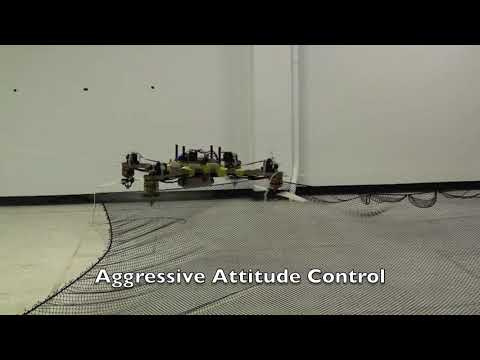
Referenced in drone threads as a demonstration that variable pitch quadcopters fly well with little drift.

Cited in aviation threads as a gripping primary-source account of incidents like stabilizer trim moving without the pilot's knowledge.

HN points to it in electric aviation threads for how small electric motors enable contra-rotating props.

HN links it in threads on FAA modernization and controller shortages as an entertaining but substantive summary of the problem.

HN commenters link it as the go-to example of what a carrier deck can handle and as an impressive flight feat.

Linked as a quick demonstration of the ion plane in threads about silent aircraft and flying cars.

HN points to it as a concrete demo of emergency autoland when threads discuss pilot incapacitation and aviation automation.

Cited as an example of a hobbyist building and flying a real human-carrying electric plane, and as a channel worth following for DIY aircraft builds.

It is the standard citation in drone and eVTOL threads for the claim that multirotors can survive a failed rotor with the right control algorithm.

Cited as an approachable hobbyist look at RDEs in threads on detonation-powered rockets.

Linked in aviation threads to show that engines are designed to contain a failed fan blade.

Posted in F-35 threads as an insider's critique from a legendary aircraft designer.

Cited as an example of effective alarm and voice-alert design and in discussions of reactions to female voices.

HN commenters link it to show how much stress airliner wings are designed to withstand, especially in turbulence and crash threads.

HN cites it as an example of the skill of sling-load helicopter pilots.

HN commenters cite it as evidence that vertical rocket landing was demonstrated long before SpaceX, with the DC-X as the main example.

Cited as a striking example of dynamic soaring letting unpowered gliders far exceed wind speed.

Cited as a vivid example that experienced pilots can ignore loud alarms, in threads on alarm design and gear-up landings.

HN links it as a vivid example of a bird strike taking out an engine, and praises the calm crew and ATC response.

Cited in autonomy debates as evidence that autonomous take-off aircraft exist and as an example of vision-based line following.

Cited as proof that a large jet airliner can safely do a barrel roll and as a famous test-pilot stunt.

Used as an example of how easy homing and guidance have become, resembling precision-guided munitions.

Cited as an example of how padding can allow survival of very high-speed impacts.

Cited as a striking example of live-line work and of potential equalization, with the air as the insulator.

HN commenters cite it in nuclear and engineering debates as evidence that concrete containment structures can withstand aircraft impacts.

Used as a concrete illustration of the commonality constraints that forced Boeing's 737 MAX design choices.

Linked as the go-to footage of a linear aerospike engine actually running whenever aerospike nozzles come up.

HN links it to illustrate how the shuttle's never-flown RTLS abort profile would work.

HN cites it as a fun, concrete demonstration that Magnus-effect rotating cylinders can generate enough lift to fly.

Cited in threads on personal flight and hoverboards as evidence that jet-powered personal flight devices really exist.

Posted as supporting footage when threads discuss spectacular airliner demos and steep takeoffs.

HN points to it as proof that manned multicopters and eVTOL craft existed well before the current hype.

HN cites it as a well-known early example of FPV drone flight in drone and regulation discussions.

HN cites it as the surprising example that the fastest RC aircraft is an unpowered glider using dynamic soaring.

HN cites it as a famous bit of aviation history showing the roll was a gentle 1G maneuver and salesmanship.

Linked in lift-theory arguments as a clear demonstration that air over the top of a wing does not need to catch up with air underneath.

Used as a concrete example of automation successfully saving an incapacitated pilot.

Cited to show that empty slot-keeping flights predate COVID and Lufthansa's recent practice.

Cited in threads about evacuation rules, mostly as an example of a certification test that commenters call unrealistic.

Cited as an audible example of what hypoxia sounds like and how consciousness fades gradually.

Linked as a vivid real-world illustration of wind gusts and lift acting on aircraft.

HN cites it to show that a quadcopter can keep flying after losing a rotor, though under ideal lab conditions.

Linked in aviation threads as a concrete example of the Cirrus parachute in action, including its rough touchdown.

HN cites it as a practical use case for jet suits in emergency response, though some doubt how usable the suit is.

Cited as historical precedent for large government industrial investment and for modern gigacasting.

HN cites it as real evidence for whether a non-pilot can land a plane, whenever the topic comes up.

Cited in drone regulation discussions as evidence that quadcopters can injure people.

Linked as a primary source recording for the reversed-controls incident in aviation safety discussions.

Cited as an example of airliner crash tests in discussions of crash survivability and seat design.

Cited as a favorite flying oddity and as a joke about projects that get airborne through sheer thrust.

HN links it as striking footage of how fast and heat-stressed hypersonic interceptors and ICBM re-entry vehicles are.

Used as a vivid example of personal flight that needs no airport, often in threads on drones and aviation regulation.

HN used it during 737 Max crash discussions to show how the stabilizer trim works and why manual trimming takes time.

HN cites it for the live demo of multicopters flying with fewer working rotors.
Which of these have you already seen?
Connect YouTube and HackerTube AI hides what you've watched and ranks the rest for you.