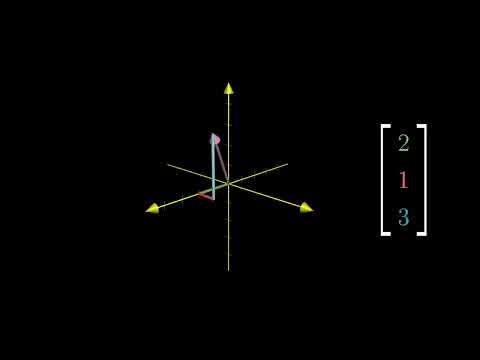
HN's go-to recommendation for learning linear algebra intuition, repeatedly credited with making concepts click and complementing textbooks.
The best YouTube videos of all time, according to Hacker News
The all-time classics: videos Hacker News has recommended across the most separate months since 2007.

HN recommends it repeatedly as one of the best and most entertaining programming talks, and as the talk that makes the Y combinator click, even for people who do not use Ruby.

HN repeatedly calls it the best in-depth introduction to IC manufacturing, a sense-of-awe talk by an independent engineer, while wishing for an updated version.

HN treats it as the canonical, near-universally recommended lecture on giving talks and presentations.

HN treats it as the best starting point for really understanding backprop and neural nets, because Karpathy explains the why with intuition and builds everything in code.

HN repeatedly recommends it as a master class in limited-palette pixel art and palette cycling, from an artist behind Loom and Monkey Island.

It is HN's standard answer to why Python cannot easily get much faster, and is recommended by people who work on JITs and alternative runtimes.

HN repeatedly calls it the clearest introduction to waves and transmission-line behavior, better than modern explainers.

HN treats it as the definitive, compassionate documentary on why people fall into conspiracy theories.

One of the most consistently recommended lecture series on HN, praised as fascinating, funny and eye-opening about human behavior across many scales.

HN repeatedly recommends it as the best layperson overview of debt, credit and economic cycles.

HN treats it as a top-tier programming talk for learning refactoring and for the wrong-abstraction principle, recommended repeatedly over a decade.

HN's default recommendation for understanding the Fourier transform intuitively; many say it was the explanation that made it click.

Held up as a marvel of pedagogy and the best explanation of differentials, recommended again and again.

It is HN's favorite pitch for Elixir and the BEAM, credited with convincing many people to adopt them.

Repeatedly called the best way to understand ADHD, and recommended to anyone before commenting on it.

HN treats it as the canonical talk on software complexity, shared constantly and recommended to every programmer regardless of language.

HN commenters repeatedly recommend it as the talk that finally made quantum mechanics click, especially for programmers.

HN treats it as the standard short summary of how power and political incentives work, applied to governments, companies and workplaces.

HN users repeatedly say it changed how they think about writing, calling it a masterclass useful far beyond academia.

HN commenters repeatedly name it as the best explanation of the JS event loop and the first thing to watch before tackling async code.

HN treats it as the standard first stop for learning neural networks, praised for making the math intuitive.

HN's go-to recommendation for colormap and color-perception questions; commenters call it funny, brief, clear and a favorite talk.

HN commenters repeatedly say it changed how they hear political speech and recommend it for understanding why opponents are not simply stupid.

HN's default recommendation for a friendly, thorough introduction to heat pumps and why they are so efficient.

HN recommends it often as an entertaining and authentic dramatization of Sinclair versus Acorn, the story from which ARM grew.

HN repeatedly calls it one of the best math and graphics explainers on YouTube, praised for bridging game dev and math.

HN recommends it often and strongly as an eye-opening account of marketing psychology and the engineering of consumer society.

The most-recommended balanced take on systemd, from a BSD perspective, handed to anyone caught up in the systemd debate.

The most recommended introduction to Svelte, credited with sparking its adoption.

HN repeatedly recommends it as a talk that changed how people model data, with ideas that apply well beyond Elm to any typed language.

HN commenters push it, often forcefully, as the video to watch to see what factory farming really involves, and some say it changed their diet.

HN calls it the gold-standard debunking of audiophile myths and the stair-step misconception, and recommends it as a primer on digital audio.

Held up as a legendary deep dive into game internals, explained lucidly and with humor, and a gateway to the channel.

HN repeatedly recommends the series it launched as the best way to understand how a CPU works, praised for Eater's clear teaching.

Recommended again and again as the best accessible overview of fusion physics, useful for judging fusion announcements and understanding why high-temperature superconducting magnets matter.

HN returns to it repeatedly as the best single introduction to understanding clinical depression.

It is the go-to recommendation for anyone who wants to genuinely understand Bezier curves and splines, and commenters repeatedly call it one of the best programming-related educational videos.

One of the most frequently recommended online lecture series on HN, praised for giving people vocabulary to examine ethical positions and for Sandel's skilled teaching.

A perennial HN recommendation, brought up whenever sampling, copyright or music history comes up, often described as a must-watch.

HN repeatedly recommends it as an entertaining, mind-opening talk on allocator design and composable generic programming.

HN recommends it as the best readily available interview with Simons, notable for his emphasis on luck and a humble approach to success.

Praised as a brilliant, deadpan and inventive hardware hack, and a good starting point for Tom7's videos.

The most-linked YouTube video on HN, recommended as an in-depth explanation of fructose metabolism.

It is the go-to talk HN commenters recommend to anyone asking about bootstrapping, SaaS pricing, or choosing bootstrapping over VC.

Frequently recommended in autonomous vehicle and Waymo threads as the main counterargument, a long but worthwhile video essay on how self-driving cars could affect cities.

HN calls it mandatory viewing on the AGC, praising the speaker's enthusiasm and the clear account of restartable, robust software design.

HN returns to it for years as an inspirational talk to send to graduates, founders and anyone at a career crossroads.

It is HN's most frequently recommended starting point for quantum computing because it avoids pop-science hand-waving and needs only basic linear algebra.

The go-to recommendation on game feel and polish, cited by HN as one of the best talks for anyone making interactive things feel good.

HN returns to it for years as an elegant introduction to writing a lexer that is easy to follow even without a parsing background.

HN repeatedly recommends it as the best hands-on way to understand how a CPU and a computer work from first principles.

HN repeatedly recommends it as an amazing talk that derives the essence of Lisp and shows miniKanren-style program synthesis.

HN regularly calls it mind-blowing and recommends it as an introduction to Levin's work on bioelectricity and regeneration.

HN repeatedly recommends it as the definitive, mind-changing explanation of dishwasher use, even though it runs over 30 minutes.

HN treats it as the canonical talk on simulation testing and a mind-blowing example of how far rigorous testing can go.

HN has recommended it for a decade as the standard explainer on automation and unemployment, though skeptics later cite it as an example of overconfident predictions.

HN repeatedly recommends it as the deepest public look at how iCloud Keychain and Apple's device and cloud security are designed.

HN repeatedly calls it the best talk on testing, and many say it changed how they approach tests, mocks and the meaning of a unit.

It is HN's go-to recommendation for the case that programming environments should give instant feedback, and it appears in nearly every thread on live coding, visual programming or developer tools.

Commenters repeatedly name it the best explanation of how internet fame, mobs and outrage work, and cite it in threads about harassment and public figures.

Heavily recommended as a masterpiece of popular science and the classic illustration of how fragile interdependent systems are, trotted out in every blackout or supply chain thread.

HN repeatedly names it the best resource on API design, a staple answer to any 'how do I design an API' question.

Held up as the landmark demoscene production and a counterpoint to software bloat.

HN commenters send it as a short antidote to cynicism, showing long-term global progress and the shrinking gap between rich and poor countries.

HN commenters repeatedly recommend it as a beautiful, approachable explanation of analog mechanical computation, and many have rewatched it.

It is the go-to funny, accessible explanation of why you should never implement datetime handling yourself, linked in nearly every timezone thread.

HN commenters cite it as the talk that convinced them of immutability and functional programming.

HN commenters recommend it as an intimate, embedded look at late-90s web history and the spirit of building something important under pressure.

HN treats it as a classic, near-mandatory talk on how programming tools and paradigms stagnated and which older ideas deserve revival.

A perennial recommendation for anyone learning game feel and juice, praised for showing concrete steps that turn a bland prototype into a satisfying game.

HN repeatedly recommends it to counter overpopulation alarm with data on falling birth rates.

HN recommends it as the canonical video on how music theory is really the theory of one Western tradition, with the raga example.

HN treats it as the go-to layperson-friendly argument against e-voting and links it in nearly every voting-technology thread.

HN people cite it constantly as the clearest explanation of normalization of deviance and how complex systems drift toward failure.

HN treats it as the standard answer to why FP isn't mainstream and why languages succeed.

HN commenters call it a moving, well-made human story about AI and Go that works for non-technical viewers and does not date.

HN commenters send people to it whenever nulls, Maybe/Option or static typing come up, as a thoughtful dissent from the type-system orthodoxy that changes how some people model data.

The go-to recommended video for newcomers wanting a clear, visual explanation of how Bitcoin and blockchains work.

HN commenters repeatedly recommend it in longevity and aging threads as a concise, fun case for fighting aging.

HN treats it as the canonical video to link whenever talking to police or interrogations come up.

Perennially recommended as an inspirational talk for people facing setbacks or choosing a direction, and a source of oft-quoted lines like the brick wall.

HN people recommend it as a stunning, mind-bending and existentially humbling view of deep time, and it appears on lists of favorite YouTube videos.

HN commenters call it their favorite introduction to regenerative agriculture, and several say it changed how they garden or farm.

HN repeatedly recommends it as a fantastic demonstration of procedural, OOP and FP approaches to the same problem, and of functional core and imperative shell.

HN commenters frequently recommend it as an eye-opening case against heavy porn use, though it is contested science.

HN treats it as the go-to visual introduction to transformers, and many say it finally made attention and embeddings click.

HN commenters recommend it as a clear framework for placing the current US and world situation within historical debt and empire cycles.

HN people recommend the SICP lectures as a deeper, livelier route into the book and a formative course even for seasoned programmers.

The default link in copyright and takedown threads, recommended as an excellent, comprehensive explanation of why automated enforcement and the law work as they do.

A perennial HN recommendation for outage and postmortem threads, praised as funny, educational and one of the best postmortems anyone has seen.

HN brings it up in any thread about autopilot, Tesla FSD, self-driving cars and crashes as the classic lecture on automation dependency.

A perennial HN recommendation whenever lobbying, SOPA, taxes or political corruption come up, with several commenters saying it changed their views.

HN's go-to short explainer for the City of London versus London, cited in many finance and UK threads.

It is the standard link in HN threads about software decay, lost knowledge and fragile technological civilization.

Recommended whenever APL or array languages come up as the quickest way to see why the paradigm is so striking.

Recommended for years as the best technical introduction to memristors from the person who found the physical device.

HN commenters recommend it as a pointed critique of philanthropy and win-win thinking, delivered inside Google itself, and cite it across threads on wealth, tax and tech power.

Repeatedly called one of the most useful talks on building organizations and managing creative teams.

It is the standard recommendation for anyone puzzled by unexplained benchmark changes from tiny code edits, and for learning about causal profiling.

HN recommends it as an illuminating, eye-opening long-form take on status, luck and how we judge the successful and unsuccessful.

Hailed as the best video on electrical engineering and an essential, eye-opening watch for anyone designing high-speed boards.

HN returns to it again and again as a favorite example of elegant, chip-free mechanical engineering that beats modern toasters.

Seen as a classic and often the moment programming 'clicks'; commenters praise Abelson's opening that computer science is not about computers.

HN invokes it in nearly every content moderation and censorship thread as the most eloquent case for free speech.

HN repeatedly calls it a mind-blowing and accessible introduction to SDFs and procedural art from a master explainer.

A perennial HN recommendation for building intuition about exponential growth, cited whenever endless growth, energy or population come up.

A staple on must-watch lists, recommended as a starting point for Kay's thinking and for why software is often poor and ahistorical.

Recommended often as a clear explanation of why the US system is built to be slow and why gridlock protects minorities.

HN treats it as the standard starting point for Game Boy emulator writers and homebrew developers, with several calling it one of their favorite talks.

HN repeatedly recommends the Crockford series as a must-watch history of computing and programming languages, and as a way to learn to think in JavaScript.

HN links it constantly as the standard introduction to stroads and Strong Towns-style arguments about car-centric design.

HN recommends it repeatedly to people struggling with motivation, distraction or phone and internet addiction, as a science-based guide to dopamine.

Repeatedly urged on people choosing a stack, as a case against heavy SPA complexity and for shared web and native code.

HN readers recommend it as the best primer for understanding ADHD at a neurological level, often suggesting that even the first 10 to 20 minutes are enlightening.

HN considers it one of the best technical talks ever and cites it in discussions of language design, small cores and extensibility.

HN considers it a classic, hilarious and sobering talk on ML inscrutability and tech hubris, often rewatched.

HN treats it as the standard one-hour teaser for the book and recommends it for its deep-modules thinking before buying or reading the book.

Cited repeatedly to rebut 'just don't use Facebook' arguments and to explain why tracking becomes hard to escape at critical mass.

HN recommends it as an engaging overview of programming history and an argument for professional standards, citing the agile manifesto section and the claim that software has advanced little since the 1950s.

HN recommends it, long as it is, as an eye-opening rant on software complexity and why systems became so complicated.

HN repeatedly cites it as the definitive explanation of SwissTable, the design behind Abseil, Rust's hash map and Go's maps.

HN commenters recommend it as a long, evidence-backed theory for what changed in the 1970s and why Congress is broken, even when they are unsure they agree.

HN's go-to link in typing debates and for talk lists, and several call it their favorite programming talk even for non-Clojure users.

HN repeatedly recommends it as the definitive explanation of why Java evolves cautiously and why compatibility matters in language design.

HN commenters post it in threads about purpose, ambition, burnout and career anxiety as a reframing that life is a dance, not a march toward eventual happiness.

HN commenters recommend it for Thompson's funny, first-hand Unix history stories, some of which even Kernighan had not heard.

The go-to recommendation for learning DynamoDB data modeling, with many saying it made access-pattern-driven design click.

HN treats it as a favorite example of silly but educational computer science, recommended often when threads touch odd storage hacks.

HN points to it as the grounded, approachable explanation of why REBCO magnets changed the outlook for fusion.

HN strongly recommends it as the clearest, best-illustrated explanation of the solar gravitational lens idea, and links it whenever exoplanet imaging comes up.

HN treats it as the definitive, funny and educational answer to why X could not be fixed, and links it in almost every Wayland vs X argument.

Recommended as the rigorous, math-heavy original course, deeper than the Coursera version, for learning machine learning.

Frequently recommended as an influential talk on decoupled, testable architecture, though some commenters push back on Martin's TDD advocacy.

Repeatedly recommended in education threads as the definitive talk on why lectures fail and what works better.

HN recommends it as career and research advice on choosing important problems and doing first-class work.

HN treats it as the go-to explanation of ECS, valuable even for people who don't use Rust.

The go-to talk showing how Erlang let a tiny team run a massive messaging system.

HN recommends it as a funny, accurate and easy primer on Keynesian versus Austrian views of the business cycle.

HN points people to it as the best introduction to Acme and its very different take on editors, shells, and GUIs.

HN treats it as the definitive deep dive on Nanite, admired for the engineering ambition behind pixel-sized triangles and compute-driven rendering.

HN returns to it constantly as permission and method for thinking deeply before coding, and as an antidote to always-working anxiety.

HN treats it as the classic demonstration of how analog mechanical computation works, especially the differential gear section.

A classic recommended to people learning JavaScript, even though some find it dogmatic and dated.

It is a go-to recommendation whenever cans, good design or mass-produced objects come up, and many also recommend the whole channel.

It is one of the most frequently recommended videos on HN for old-school game development hacks under tight hardware constraints.

The go-to accessible introduction to neuroevolution and NEAT, praised for crediting prior research.

It is HN's favorite example of extreme code compression, a compelling song and visuals from a program smaller than a tweet.

Strongly recommended as the entry point to a channel on urban planning and car dependency in North America.

Recommended as the standard companion to any Adam Curtis film, since it lampoons the style and gives reasons to take his claims with skepticism.

HN points to it as the definitive, entertaining account of Sun's fate under Oracle, and quotes its Ellison lawnmower advice whenever Oracle behaves badly.

HN keeps pointing to it as the clearest explanation of how low-density infrastructure is financed and why it is unsustainable.

HN's most frequent recommendation for a clear, approachable foundation in how LLMs work without heavy math.

HN returns to it again and again as a demonstration of how programmable and composable 1970s systems were compared with today's.

HN commenters recommend it constantly in threads about advertising, propaganda and manipulation as the origin story of the consumer society.

HN recommends it as a talk whose advice on simplicity and avoiding unnecessary work applies well beyond games.

Frequently recommended as an entertaining account of a failed launch and recovery, especially in threads about Star Citizen and over-promising.

HN repeatedly names it among the best programming talks, loved for its craftsmanship message that complex tooling can hide simpler solutions.

HN repeatedly recommends it as the clearest and most correct beginner explanation of monads, with several commenters saying it finally made them click.

HN cites it often in debates on inequality, cost disease and stagnant middle-class income, praising its data-driven approach.

Commenters repeatedly cite it as the talk that reframed how they think about caching, derived data and event sourcing.

HN commenters recommend it, with its follow-up, as an exposé of fake likes and bot activity, and as a warning before spending on Facebook ads.

The canonical recommendation whenever percentiles, tail latency, load testing or averages come up, described by some as life changing.

Commenters offer it as a fascinating, accessible introduction to the world of fungi whenever mushrooms or mycelium come up.

HN uses it in discussions of pay, management, and motivation as the standard short explanation of autonomy, mastery and purpose.

Loved on HN as a hilarious, brilliant example of hacker-academic work and cited whenever game-playing AI or fuzzing comes up.

HN recommends it as the canonical presentation of 'functional core, imperative shell' and a practical answer to unit versus integration testing.

A perennial favorite, recommended as proof that expressive modern C++ can compile to efficient code even on tiny retro hardware.

Repeatedly recommended as a revelatory talk on how little control the main OS has over modern SoCs and PCs.

Linked in threads about meritocracy, careers and startups as a reminder that luck shapes who ends up on top.

HN treats it as the definitive explanation of Conway's Law and links it in almost any thread about org structure shaping software.

Frequently recommended in threads on nutrition, cancer and veganism as a science-focused case for plant-based diets, with at least one commenter saying it made them go vegan.

Recurs in threads about RSI, accessibility and voice coding as the go-to demo of a custom spoken command language.

HN repeatedly cites it as a striking example of Common Lisp used to push the frontier of science, and as one of the most inspiring tech talks.

HN has recommended it for years as the most useful and entertaining talk on sleep, often to people struggling with tiredness or productivity.

HN recommends it for productivity, focus and working-from-home threads, since its advice on breaks and mental modes applies beyond studying.

It is one of HN's most frequently recommended programming talks, cited whenever people debate complexity, simplicity and abstraction, and valued well beyond Clojure.

A staple recommendation in new year and goal-setting threads, with many commenters adopting yearly themes.

HN treats it as a must-watch classic for writing Pythonic code, though somewhat dated for modern Python.

Strongly recommended in Shenzhen and hardware threads for its view of fast cycles, loose IP and the maker ecosystem.

HN programmers recommend it, and the Jai series that followed, for the game-industry view on replacing C++ and for watching a language being invented.

A staple recommendation for anyone learning math, praised for visual intuition that makes memorized formulas make sense.

HN treats it as the canonical talk for the case that vanilla Vim goes a long way and plugin dependencies are a burden.

Recommended again and again in traffic-safety threads as an eye-opener on road design versus posted limits and driver behavior.

HN repeatedly calls it a fantastic explanation that made FFT click, with some rewatching it periodically.

HN recommends it often and warmly, as an inspiring and peaceful view of self-reliance and handcraft, in threads on cabins, solitude and woodworking.

HN regulars send freelancers and consultants to it whenever clients don't pay or contracts come up.

HN cites it repeatedly as the root-cause argument that money in politics must be fixed before other issues, and as background for his Mayday PAC.

HN returns to it in every versioning and API stability debate as a challenging, contrarian talk worth watching.

HN treats it as the definitive, engaging talk on hash table internals and Python dict ordering, and recommends it in tech-talk lists.

HN returns to it constantly in software performance debates as the primer on non-pessimization and why modern software is slow.

Recommended as the best account of Blender's history and its user-focused approach as a free software success story.

It is the go-to talk HN points to for data-oriented design and hardware-aware performance thinking, despite Acton's blunt style.

HN's go-to explainer for why FPTP leads to a two-party system, linked in countless voting-reform and US politics threads.

HN commenters repeatedly point people to it as the most accessible, developer-friendly introduction to geometric algebra and its use in graphics and physics.

HN treats it as an essential piece of computing history that shows how many modern interface ideas were already solved in 1968.

HN recommends it as an accessible, widely shared critique of schooling, and cites it in threads on ADHD, creativity and education reform.

Frequently recommended as an excellent, clear introductory RL course from the lead of AlphaGo, pairing well with Sutton and Barto.

HN frequently calls it the best single video on git because it teaches the underlying data structures.

HN commenters call it one of the best security talks and the standard introduction to LANGSEC, which they use to argue for simpler, well-specified input formats.
Which of these have you already seen?
Connect YouTube and HackerTube AI hides what you've watched and ranks the rest for you.